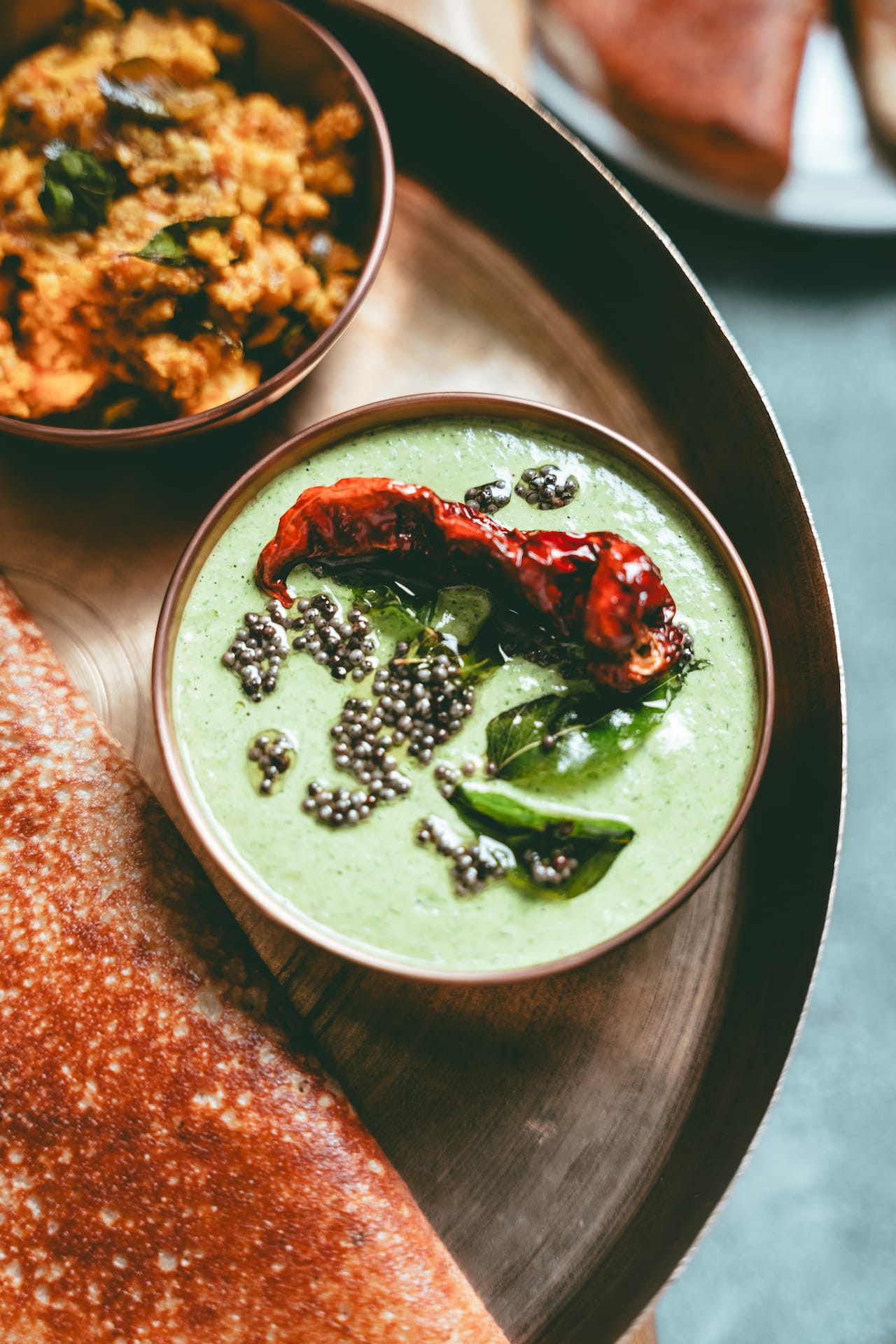
When it comes to chutneys, we often think of vibrant, tangy, and herbaceous blends that can elevate any meal. This versatile and nutritious dip is not only easy to make but also a delightful accompaniment to a variety of dishes.
Why use walnut?
While peanut is the most common choice to use in South Indian chutney, I used walnut here for the earthy flavor and a creamy texture. They’re also packed with omega-3 fatty acids, antioxidants, and essential nutrients that make this chutney as healthy as it is delicious. By incorporating walnuts, you add a layer of complexity to the chutney that pairs beautifully with the fresh, bright notes of cilantro.
Ingredients you need for Walnut Cilantro Chutney
Walnut - You just need a handful of walnut in this chutney. If you don’t have, you can substitute with almond. Cilantro - Fresh cilantro leaves, use the leaves and stems too. Garlic - Just one garlic clove is enough. You can skip if you don’t like the taste of raw garlic. Salt for seasoning TADKA (Hot Oil Tempering) - Adding hot oil tempering is the best way to enhance the flavor of chutney. It’s a very common cooking technique used in Indian cooking. For Tadka, you need oil, black mustard seeds, dry red chili and asafoetida.
Steps to prepare
The steps are just too easy! 1- In a blender, add the walnuts. 2- Add roughly chopped cilantro leaves and stems, salt and yogurt. Blend, taste for salt and add more if needed. Place it in a serving bowl. 3-Prepare the tadka by heating a little oil in a pan and add mustard seeds, dry red chili and fresh curry leaves. It will splatter, so be careful. Here is a good article explaining tadka 4-Pour the hot tadka on the chutney and enjoy!
Storing the Walnut Cilantro chutney
Store any leftover chutney in an airtight container in the refrigerator. It will stay fresh for up to 5 days. The flavors might even develop further after a day or two, making it even tastier!
Serving options
Serve with dosa or Idli. As a dip for snacks like crackers, vegetable sticks, or pita chips. Serve as a spread on sandwiches and wraps. As a condiment with grilled meats, kebabs, or roasted vegetables. Drizzled over salads or grain bowls.