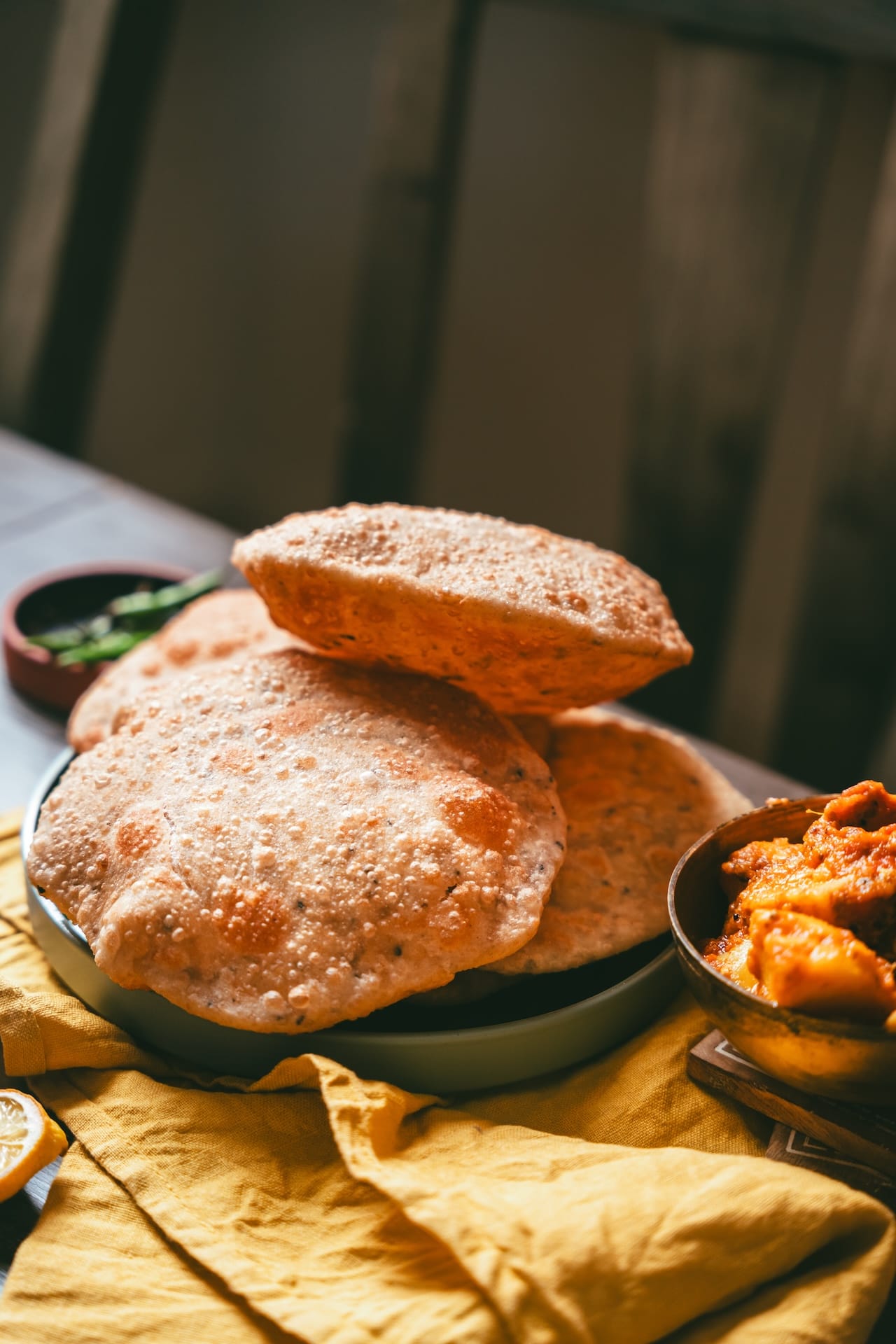
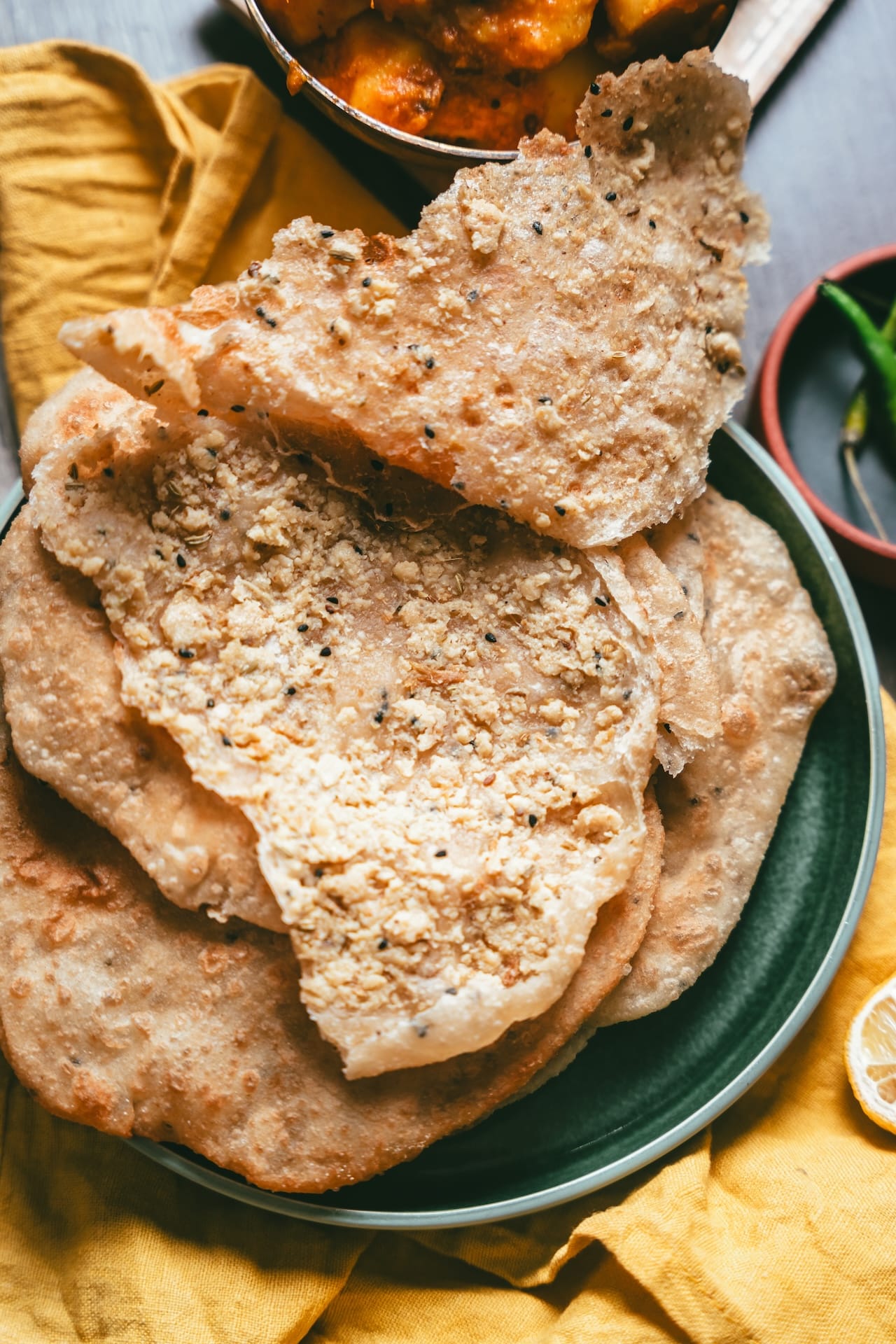
Radhaballavi is a quintessential durga puja special breakfast or snack item, usually paired with a delicious side of aloor dom (spiced potato curry) or cholar dal (a Bengali-style chana dal or split Bengal gram curry).
The story behind the name Radhaballavi
I am not of the real story. I read some article that said that the name Radhaballavi has a cultural and spiritual connection. “Radha” and “Ballavi” are often associated with Radha and Krishna, figures from Hindu mythology. Radha symbolizes love and devotion, and the dish is believed to be so divine in taste that it’s fit for a deity. Then I found this explanation - “The name is as bewitching as the dish is. According to food historians, Radhaballabhi is a staple item offered to Radha-Ballavjiu, the in-house deities of the Singha family, erstwhile rulers of Kandi in Murshidabad. Kandi Raj family, popularly known as Lala Babu’s family belong to the Uttar Rarhi class of Kayastha and their origin is traced from Anadibar Singha who settled in Bengal in 9th-century during the reign of Adisur. The royal family has always been devout Vaishnavites and Gouranga Singha built the shrine of Thakur Shri Shri Radhaballav Jiu, the presiding deity of the family” from a website - getbengal Now let’s leave aside the story and make this delicious, Indian fried bread.
Ingredients you need to make Radhaballavi
For the filling
Urad Dal -It’s Split black lentils without skin and hence looks off-white. You can buy whole or split. Fresh Ginger and Green Chili - Ginger is a brilliant flavor pairing with urad dal/split black lentils. So don’t skip that. And Green chili, you can add as much or little based on your spice level. Spices - Nigella seeds and ground fennel seeds are used. Nigella seeds add the pungent aroma, while fennel seed gives the perfumy aroma to radhaballavi. You want to use fresh ground fennel seeds for the best, refreshing aroma. Asafoetida/hing not only adds umami flavor, but it also helps in digestion. Mustard oil or Vegetable Oil to prepare the filling. And Salt for seasoning.
For the dough
All-purpose flour - You can definitely make it healthier by using whole wheat flour too, but the classic recipe calls for all-purpose flour. Salt and Sugar - Salt and sugar both helps in seasoning. Spices - Both Nigella seeds and Fennel powder is used in the filling and now again in the dough. Oil - A little amount of oil is used to prepare the dough, and then you need a lot more to fry the filled rolled dough. The exact measurement in mentioned in recipe card below.
Steps to prepare
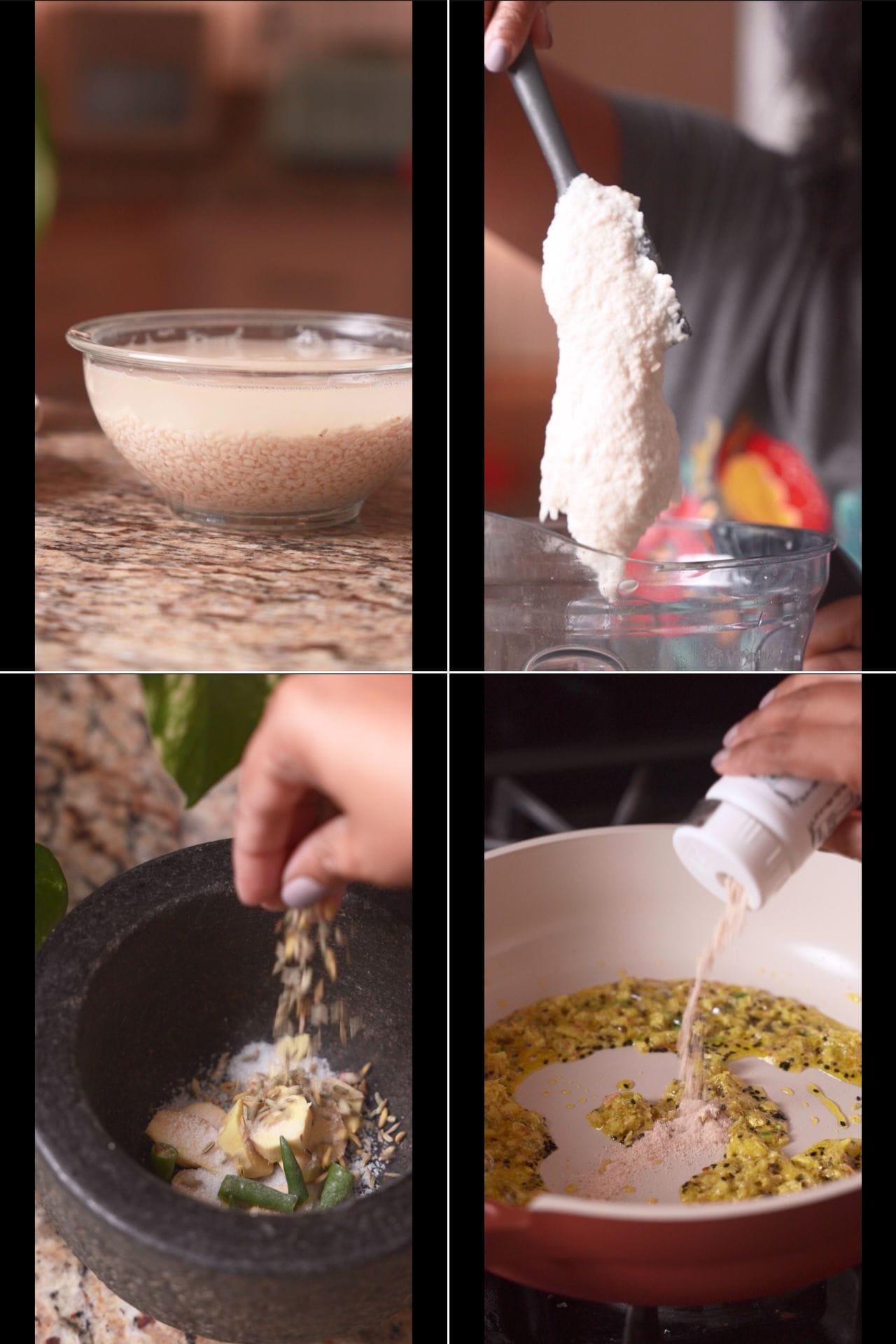
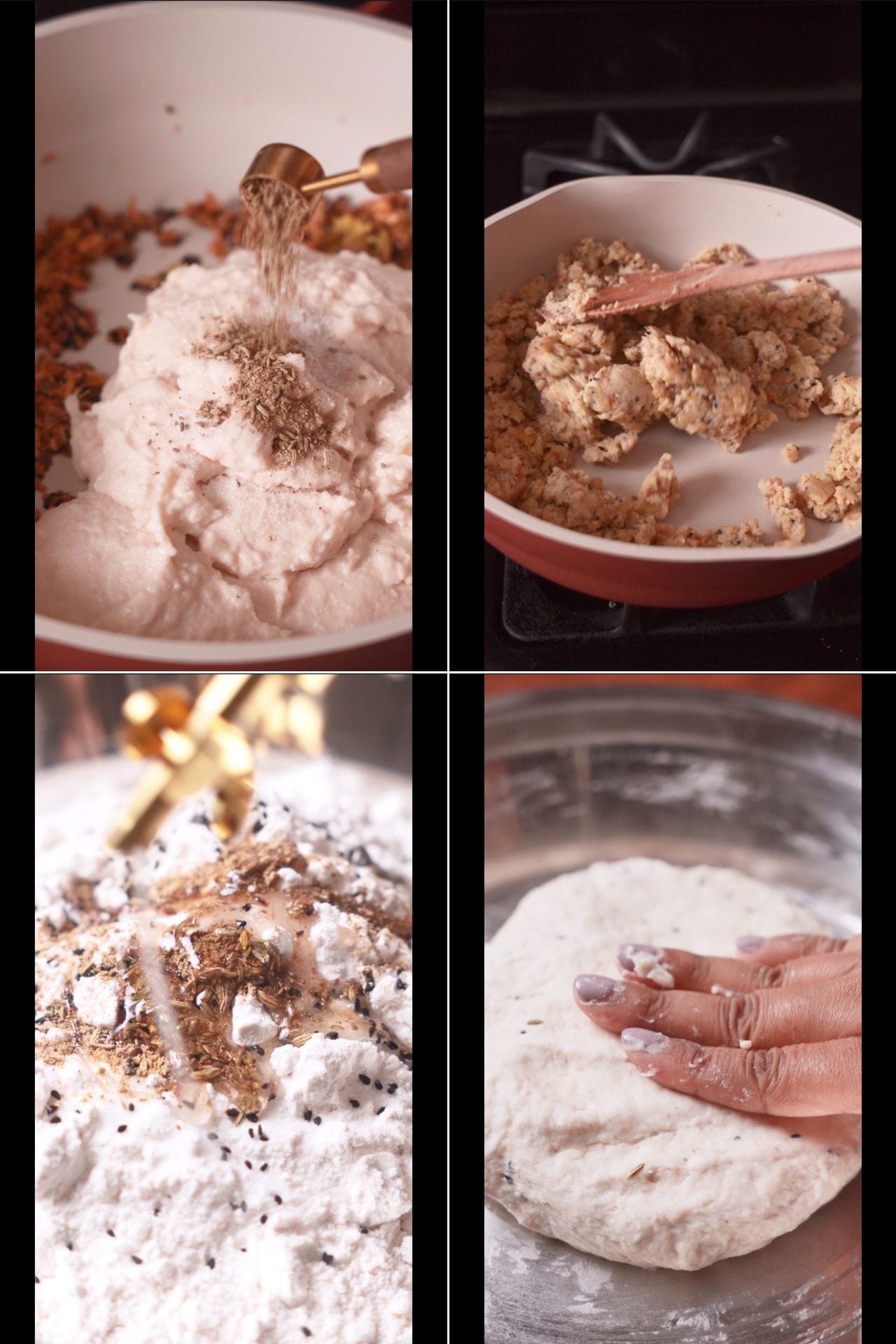
1- Wash the Urad Dal a few times and then soak it overnight or at least for 5 to 6 hours. 2- Drain most of the water and then grind it to a thick consistency. Don’t add too much water while grinding. 3- In a motor pestle add the ginger, green chili, salt and fennel seeds. Pound it to form a smooth paste. You can use an electric spice grinder too. 4- In a heavy bottom pan, add mustard oil and heat it. Then add nigella seeds followed by the ginger chili paste with asafoetida. Stir and cook for a few minutes. 5- Add the urad dal paste, salt and fennel powder. Stir and cook the paste for 5 to 10 minutes. You have to keep stirring and cook in low heat or else it will stick to the bottom of the pan and get burnt. 6- Depending on how much moisture is there, it might take more or less time to cook. You want the texture of the filling to be dry and not sticky. The filling can be prepared in advance and stored in a clean dry airtight container, in the fridge for up to a week. 7- For the dough, in a mixing bowl add the flour, salt, sugar, nigella seeds, and fennel powder. Give a mix. Add oil and mix nicely to incorporate the oil all over. To test if you added enough oil, take a small portion in your fist. If it holds shape, it’s ready. If it doesn’t hold shape, add a bit more oil and mix again. 8- Add water little by little and start kneading until it comes together into a smooth dough. Rub a little oil on the dough and cover with a damp kitchen towel for 30 minutes.
Filling Roll and Fry the Radhaballavi
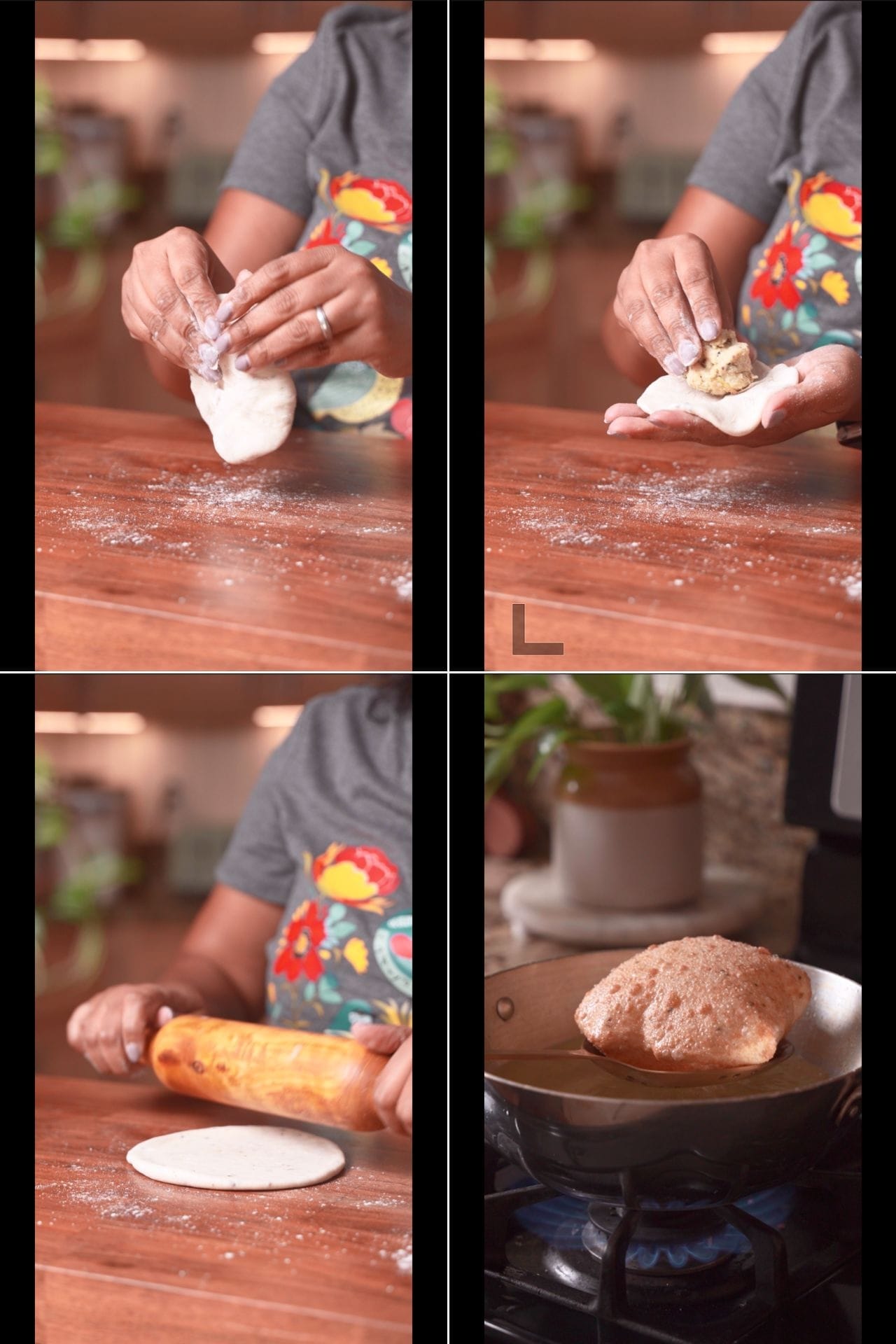
9-Divide the dough into small portions and spread it out using your hand. 10- Fill it with the cooked spiced lentils and seal the edges tight. Then roll and flatten it. 11- Dust a little flour if needed and then roll it out evenly by giving gentle pressure. 12- In a heavy bottom wok, heat enough oil to deep-fry the rolled dough. You have to heat the oil enough or else it will not puff. The temperature of the oil should be 360F to 375F. Carefully slide the rolled dough and it will start to puff almost immediately. Carefully flip and fry for a few more seconds. Radhaballavi tastes best when served right away. Hot paired with a dish of your choice.
Pairing and Serving Radhaballavi
The beauty of Radhaballavi lies in its versatility. Traditionally, it is served with Aloor Dom (a Bengali potato curry made with spices and tomatoes) or Cholar Dal (a mildly sweet lentil dish cooked with coconut, raisins, and spices). The combination of crispy, soft bread and flavorful sides makes this dish truly irresistible. For those who prefer a sweeter touch, some also enjoy it with a side of Bengali sweets like Rasgulla or Mishti Doi (sweetened yogurt), balancing savory and sweet in one meal. If you’re a fan of Indian cuisine and haven’t yet explored the unique flavors of Radhaballavi, it’s time to roll up your sleeves and give this dish a try. With its soft, flaky exterior and spicy, flavorful filling, paired with a side of soulful Bengali curry, Radhaballavi promises an unforgettable culinary experience. Whether you’re a home cook, a foodie, or just someone who loves experimenting with new flavors, this dish will surely become a favorite.