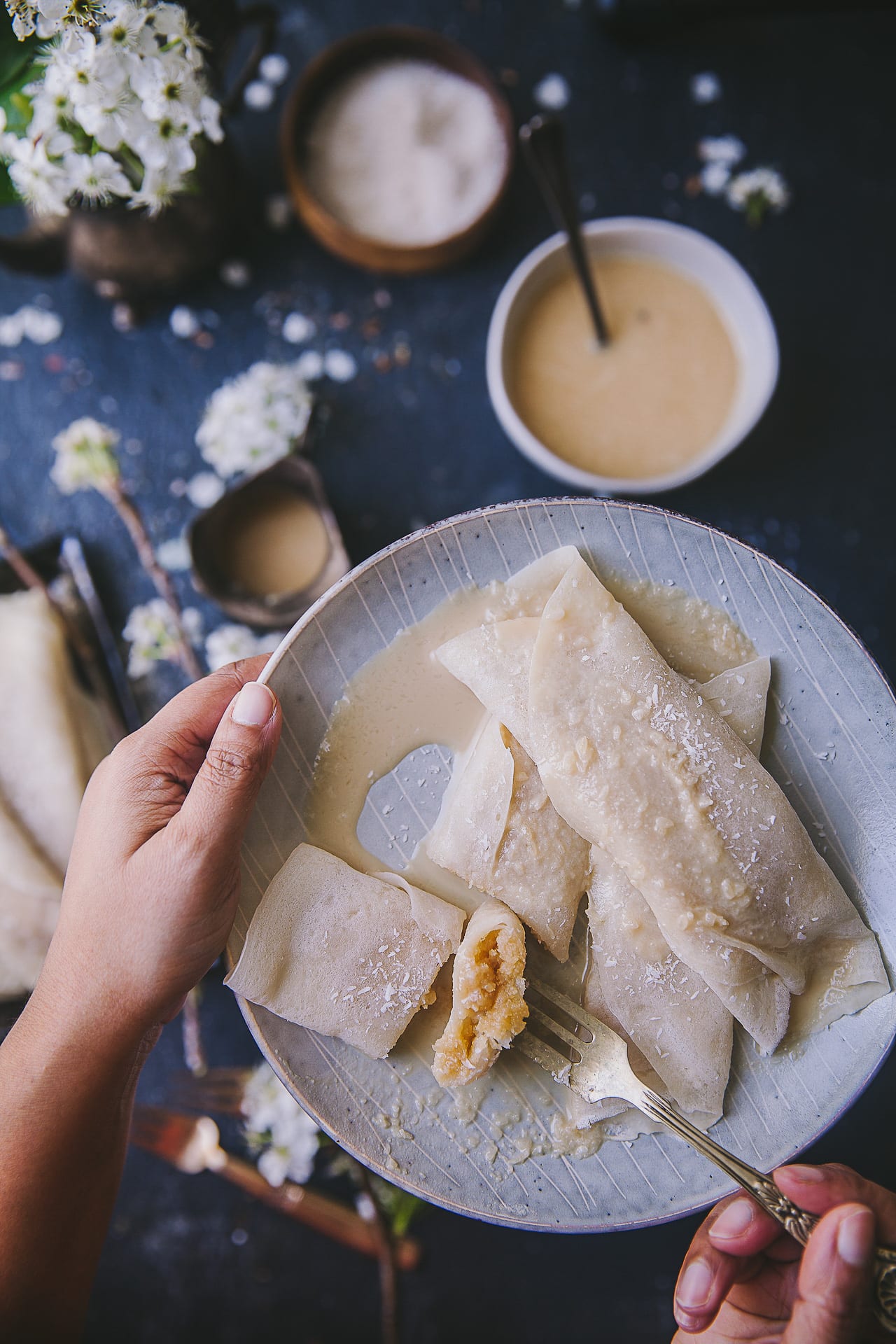
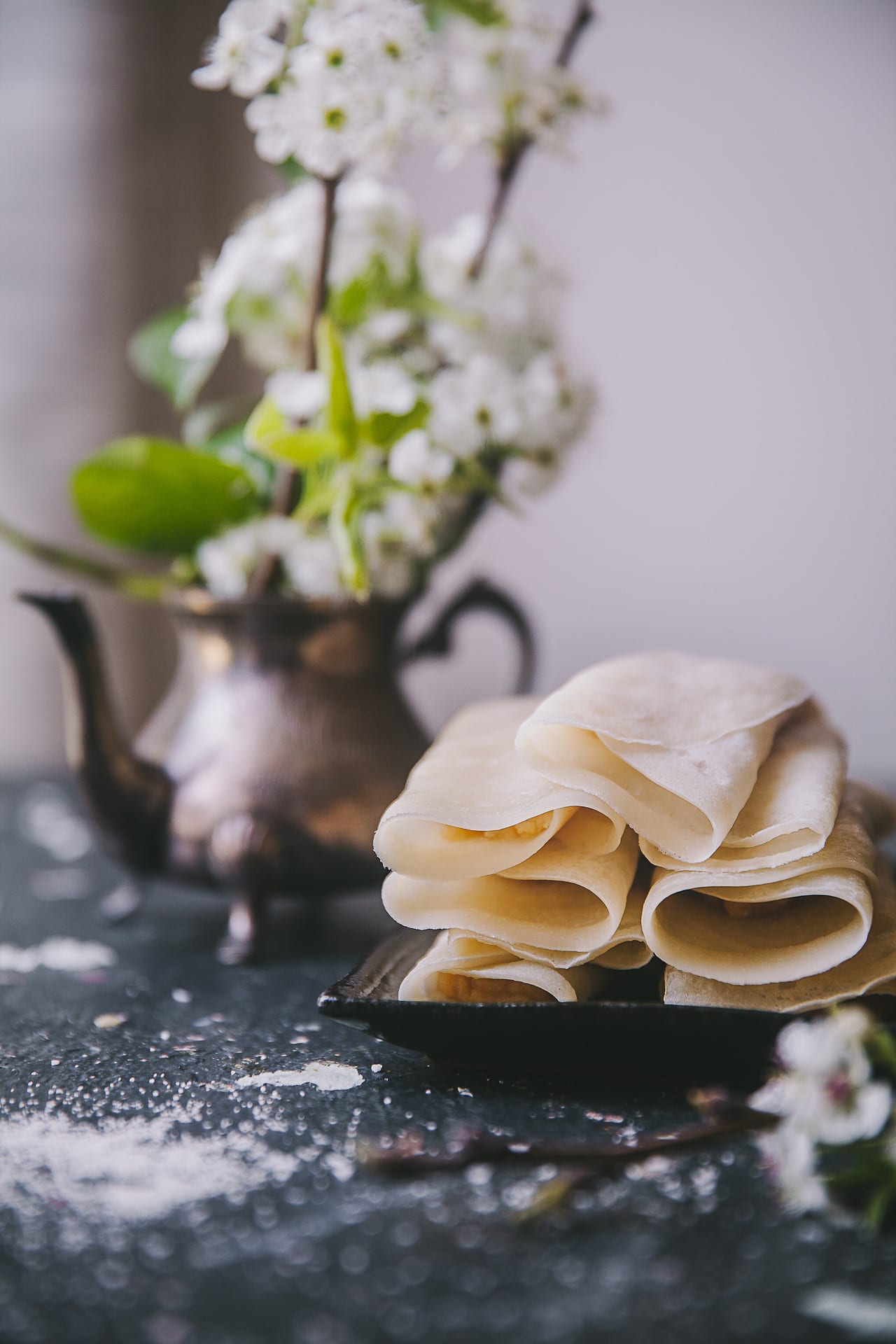
To make it extra special, I made a creamy jaggery sauce with the leftover filling and drizzled it on top of the Patishapta. It’s so delectable at every bite, with the flawless aromatic sweetness from date palm jaggery making it almost melting in the mouth.
What is Patishapta?
Patishapta is a quintessential winter treat. It falls in the category of pitha/pithe! Bengali Pitha or Pithe are special types of Bengali sweets that are typically prepared using seasonal harvest. There is a special day in January when we celebrate Makar Sankranti. It is our harvest festival and Patishapta is prepared on that day. Having said that, Patishapta pitha is one such Bengali desert that I prepare all year round because it’s so easy and quick!
Ingredients to prepare Patishapta Pitha?
Patishapta needs a very few basic ingredients: All-purpose flour: It is always prepared with all-purpose flour, but you can use whole-wheat flour. It will surely change the taste a little. Semolina: A little quantity of semolina goes in to add a mild crunchy bite to the pitha. Sugar: A small amount of sugar goes in the batter, which can also be replaced with jaggery or honey. If you add jaggery, keep in mind that the color of the patishapta will turn brown instead of white. Date Palm Jaggery: Date Palm Jaggery is typically available during winter season, and that’s the time when it’s harvested. If you are in Kolkata, you can surely find the more semi-liquid version of the jaggery known as Khejur’er Gur. When the same jaggery is processed a little further to turn it into a solid block, it’s nose as Patali Gur, which these days, is quite easily available in Indian stores (look in the freezer section). If you cannot find this particular variety of jaggery, feel free to use whatever you can find. Or try date syrup, which is more easily accessible in Middle Eastern stores. Solid Milk (Khoya): Solid milk is a luscious treat that is nothing but reduced milk. My Mom used to make this at home with gallons of milk simmering for hours in a big brass wok. These days, you get unsweetened solid milk in the freezer section quite easily. Coconut: Fresh grated coconut, or frozen. Avoid using the dry desiccated coconut flakes. Milk: A bit of milk is added to make the batter, along with water. Ghee: A very tiny amount is required to grease the pan.
Steps to prepare Patishapta Pitha/Pithe?
Start by preparing the filling.
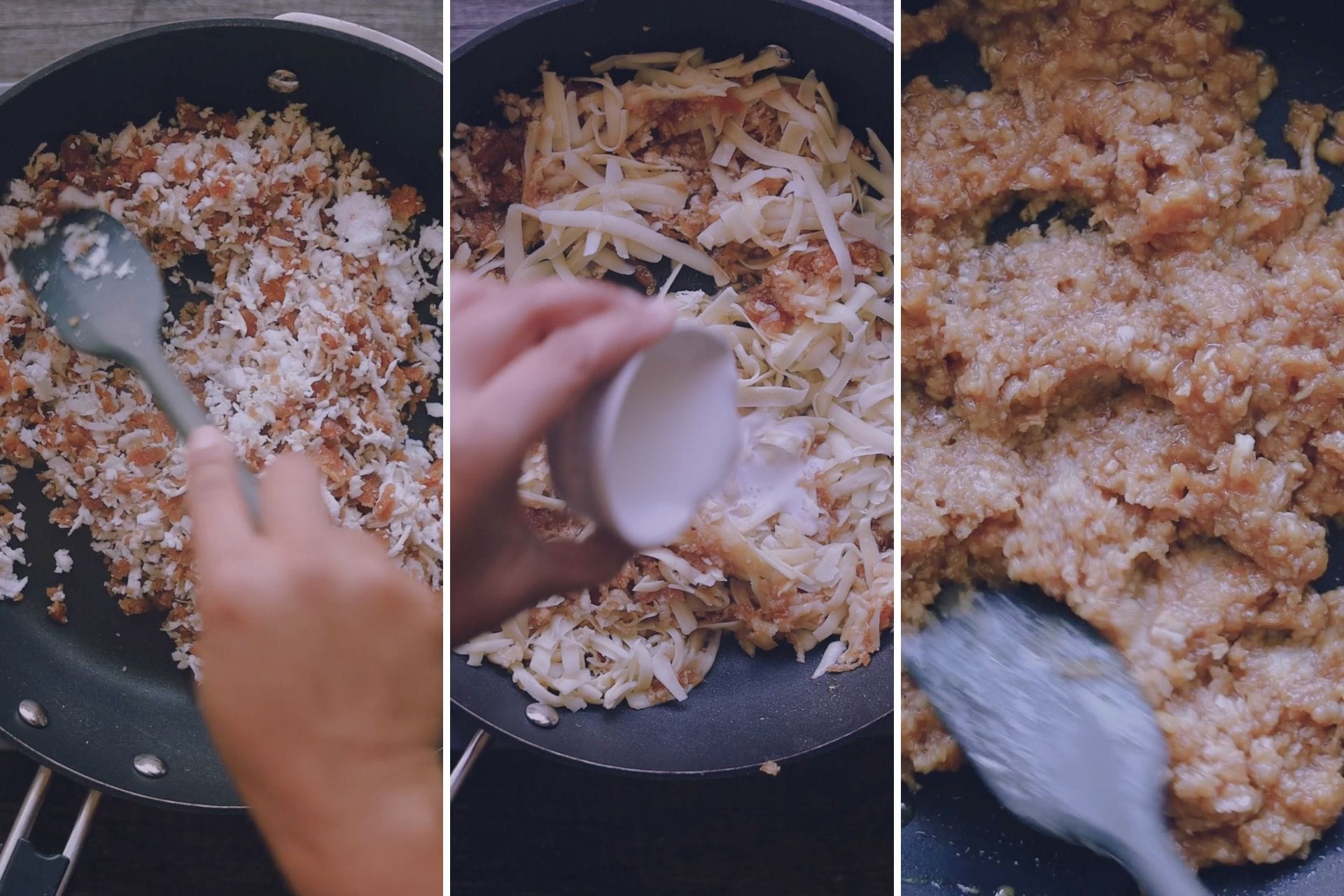
The filling is often prepared by cooking freshly grated coconut with date palm jaggery (patali or nolen gur). I like to also add some solid milk (khoya), which adds a rich texture to the patishapta filling. STEP 1- In a pan, add the grated coconut and grated jaggery. Mix it around to combine a little before you cook the mixture for a few minutes. STEP 2- If you are adding khoya (solid milk) add that and pour little milk. Then mix it around and cook in medium low heat. STEP 3 - After a while, the solid milk and the jaggery will melt. You have to keep stirring as you cook the mixture to avoid it from burning at the bottom of the pan. Cook the mixture for 5 to 7 minutes to loosen the excess moisture.
Prepare the Patishapta batter
STEP 4 - Add all the dry ingredients in a mixing bowl and whisk to mix everything. STEP 5 - Add mix to the mixture and whisk to combine everything. Make sure to remove all the lumps. STEP 6 - The mixture should be thin and runny with no lump at all. Once the batter is ready, cover and keep it aside for 30 minutes.
Prepare the Patishapta
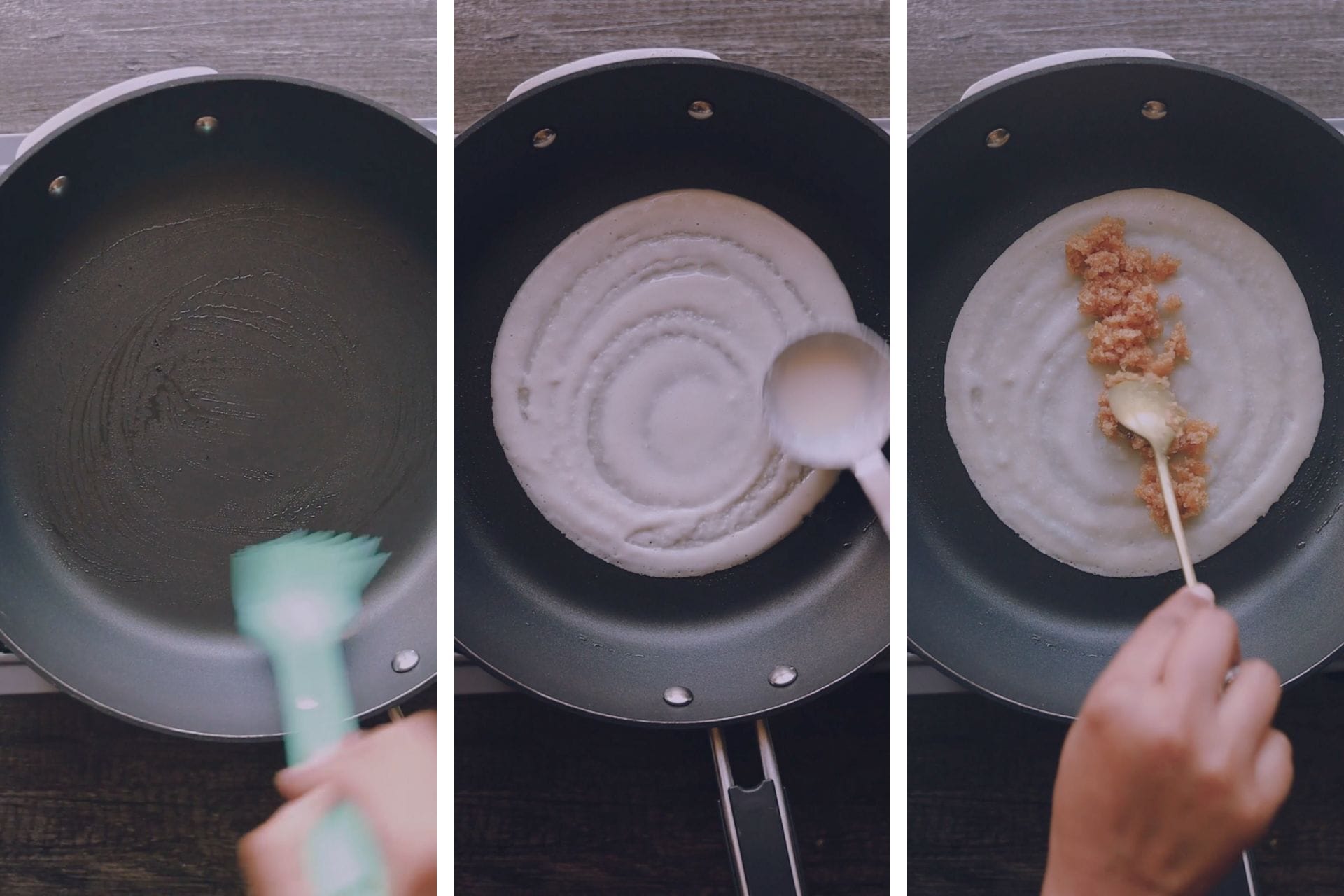
STEP 7 - Brush very little ghee on the pan to grease the pan. Make sure not to add too much ghee. STEP 8- Pour a little amount of batter and spread it out with the back of the spoon in a circular motion. It will take roughly 2 minutes to cook. STEP 9 - Add little amount of the coconut jaggery filling and then gently fold the batter from both the sides. One important point to remember is not to grease the pan too much or else, the batter won’t stick to the pan when you try to swirl. So, use just a tad bit after every few patishapta.
Storing Patishapta
I often make a lot and then store it in an airtight container in the fridge. I also store the milk separately and then warm both in the microwave just a little before serving.
Here are other Makar Sankranti Dishes you should try:
TILL CHIKKI DUDH PULI GUR MAKHANA CHITOI PITHA