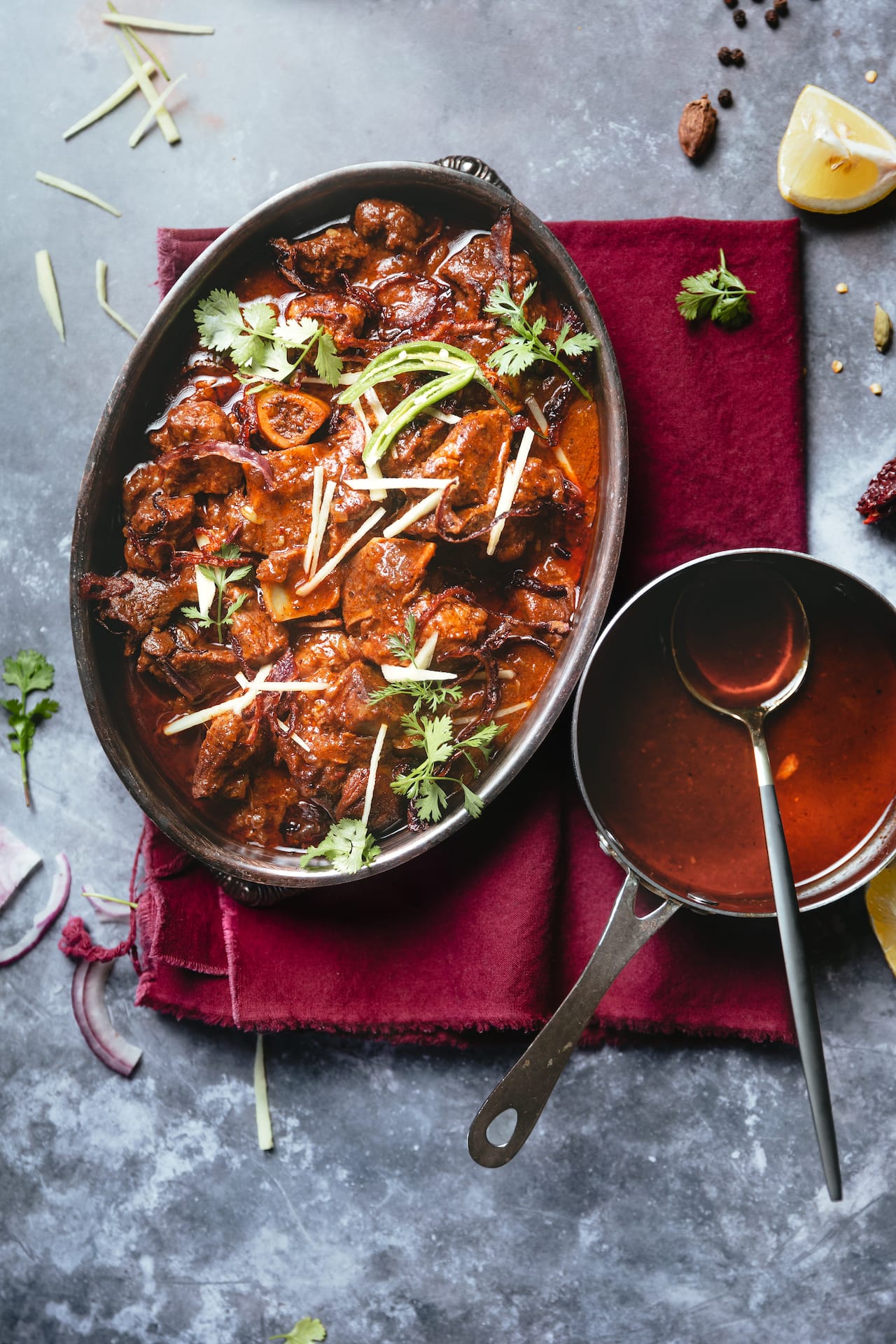
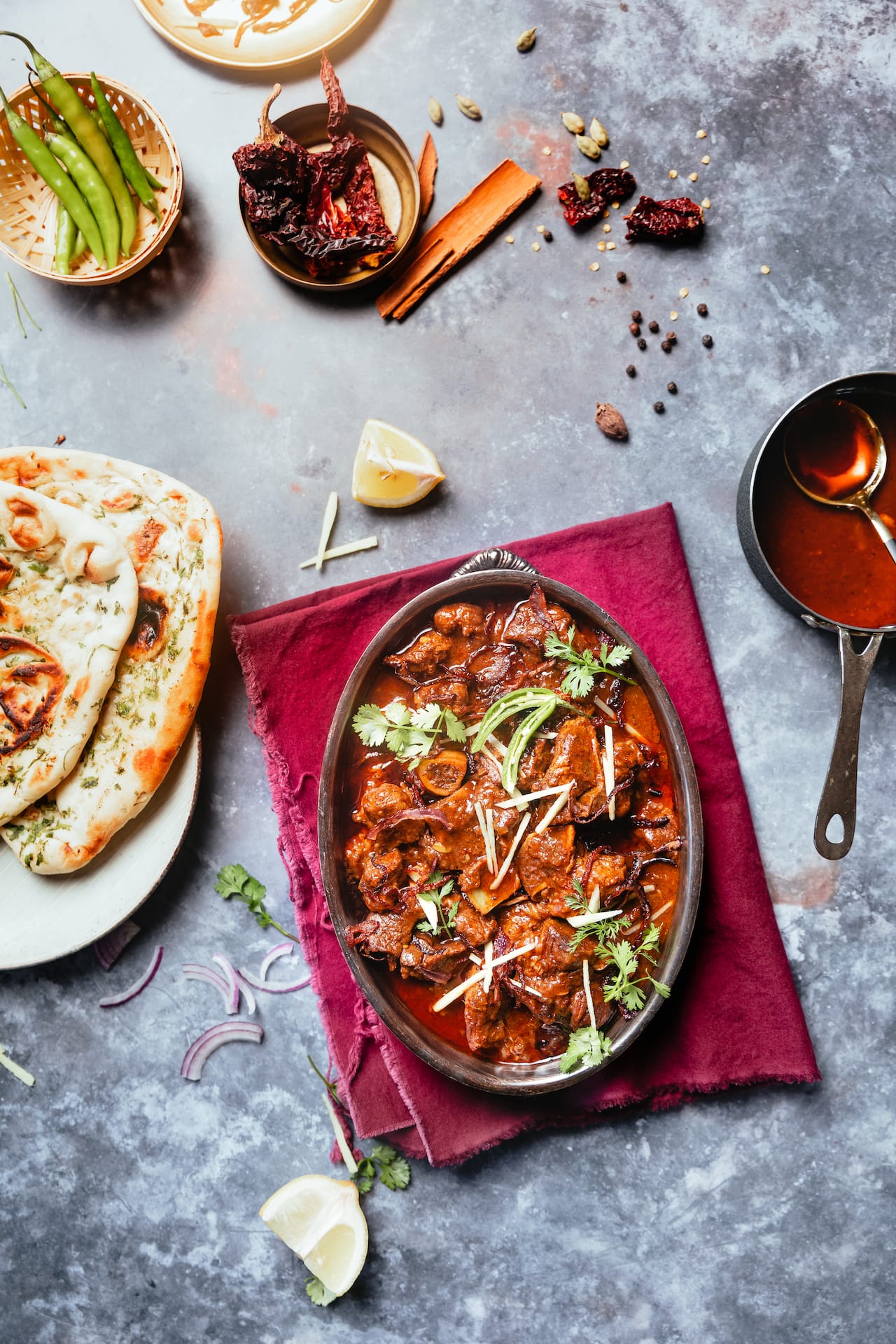
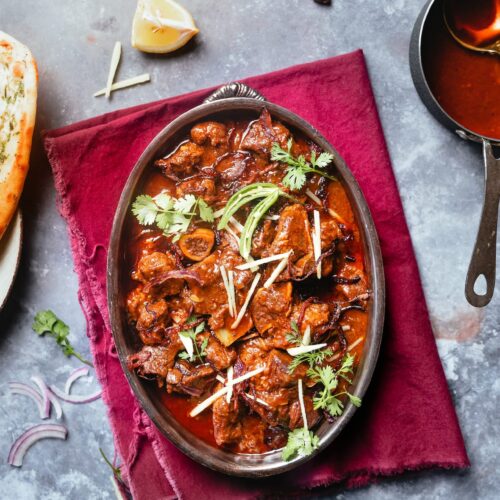
I had learned about Mutton Nihari from an Indian cooking show. In the promo of the show, the chef was cooking Mutton Nihari. And even though it showed only a few glimpses, it was enough to inspire me. Since then, I have made this dish countless number of times!
What is Mutton Nihari
Mutton Nihari is a traditional Muslim dish that came from the Royal Kitchen of Mughal. Over the period of time, the dish migrated to different regions, which each making several little twists of their own. Nihari comes from the Arabic word “nahar” which means “morning”. In the Mughal days, this dish was prepared overnight. Slow cooked for several hours and then served for breakfast to the Nawabs. Can you imagine eating something this rich for breakfast! Those Nawabs surely had some lavish appetite. Kosha Mangsho has always been my favorite mutton stew, and this Mutton Nihari gives a very close competition to my favorite. It’s extremely unique in terms of the steps that go in preparing the stew and the garnish. These steps cannot be ignored, as they are essential to the dish.
Ingredients you need
Mutton Pieces - We prepare the dish using goat meat, keeping it a mix of bone and boneless meat. If you don’t like mutton, you can definitely try the same dish with chicken. Spices - We use a lot of earthy spices in this dish. We roast the spices and then ground to make the Nirahi spice mix. Onion - We like to use red onion for this dish. Apart from adding while making the curry, we also fry some sliced red onion to add in the curry as a garnish. Garlic, Ginger and Green Chili paste - Like most curries, freshly blend garlic, ginger paste along with green chili adds a lot of flavor. Flour - We prepare a roux of flour and water to add at the end that thickens the consistency of the gravy. If you are gluten-free, just avoid this step at the end, as the curry tastes amazing even without thickening the texture of the gravy.
Steps to prepare
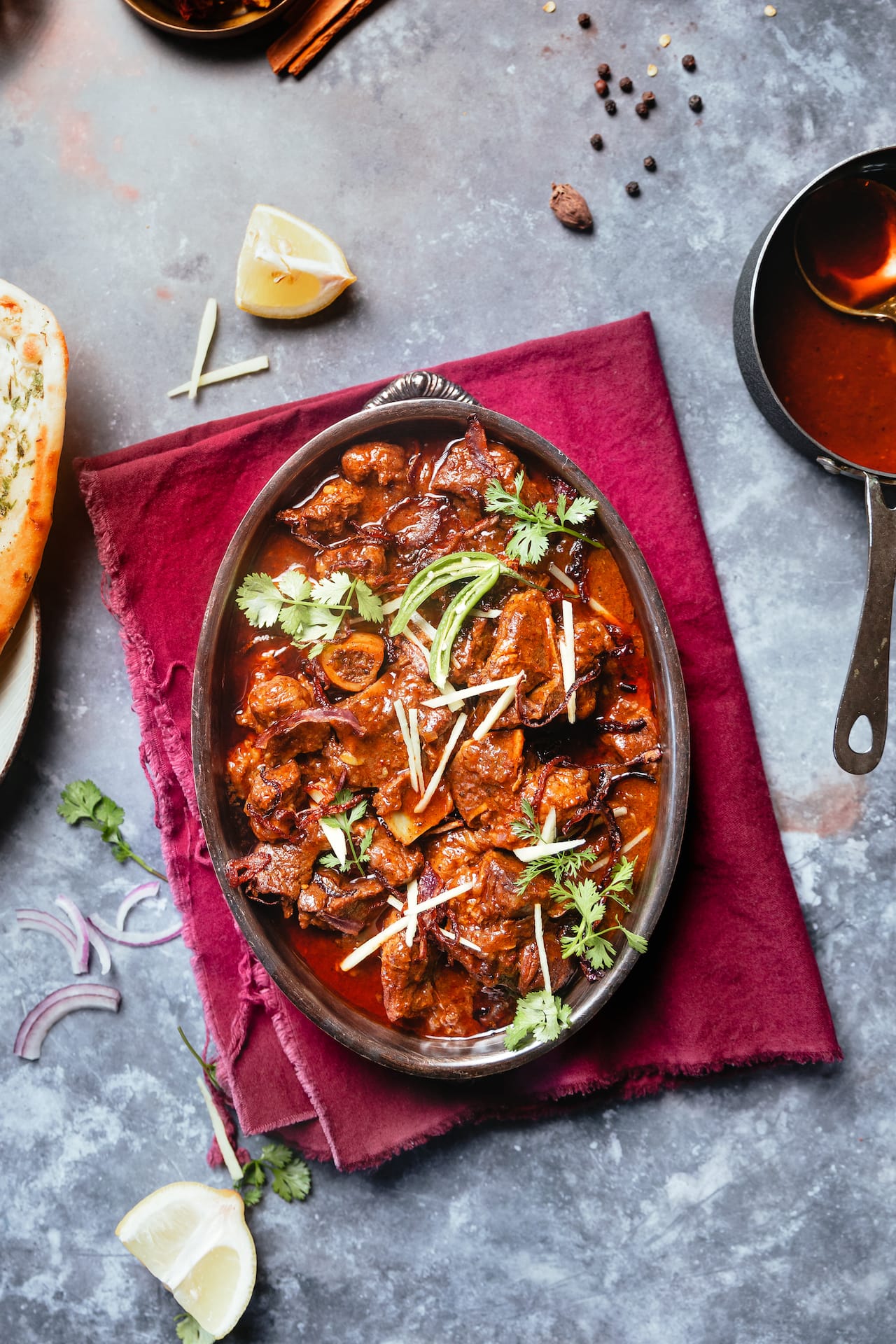
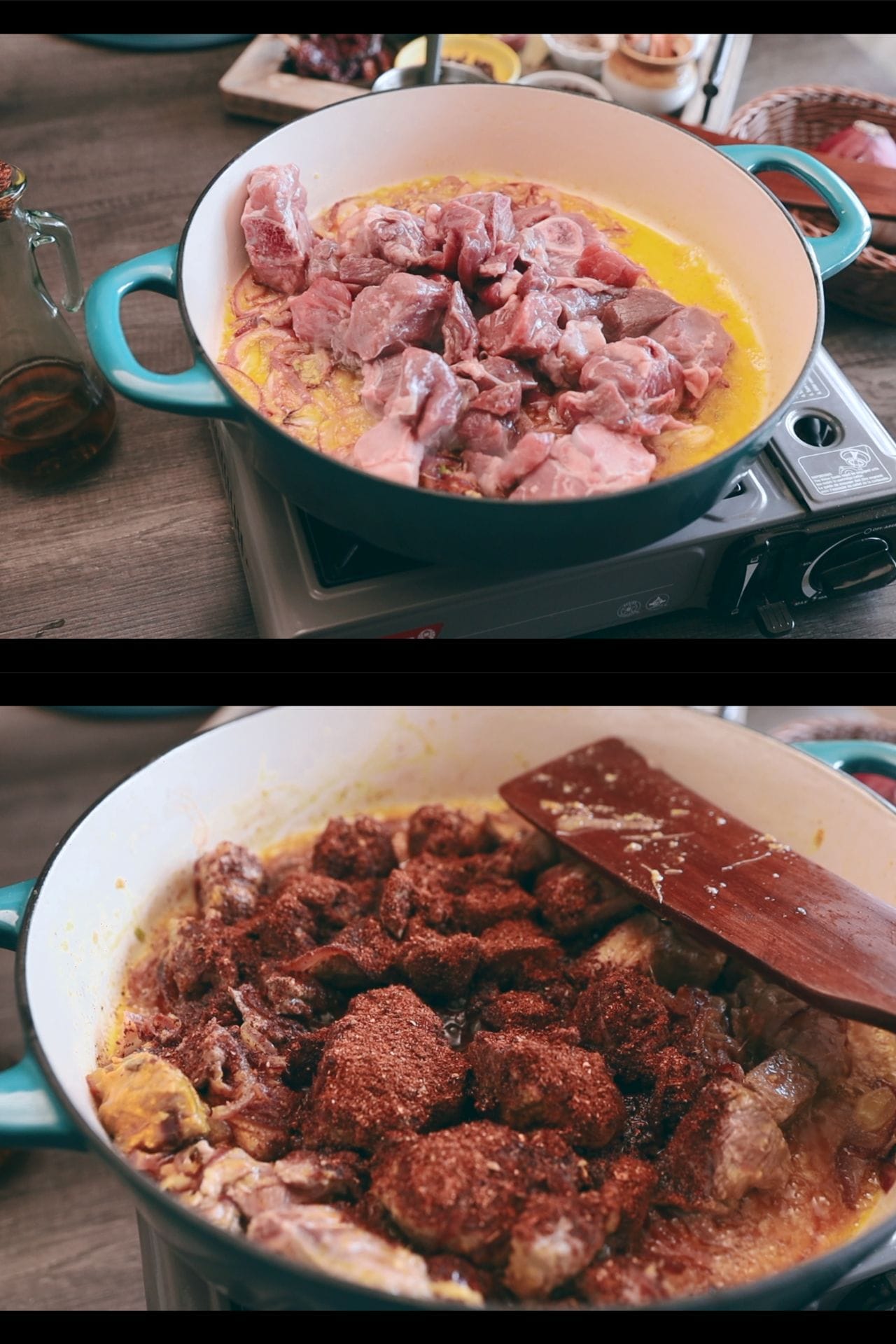
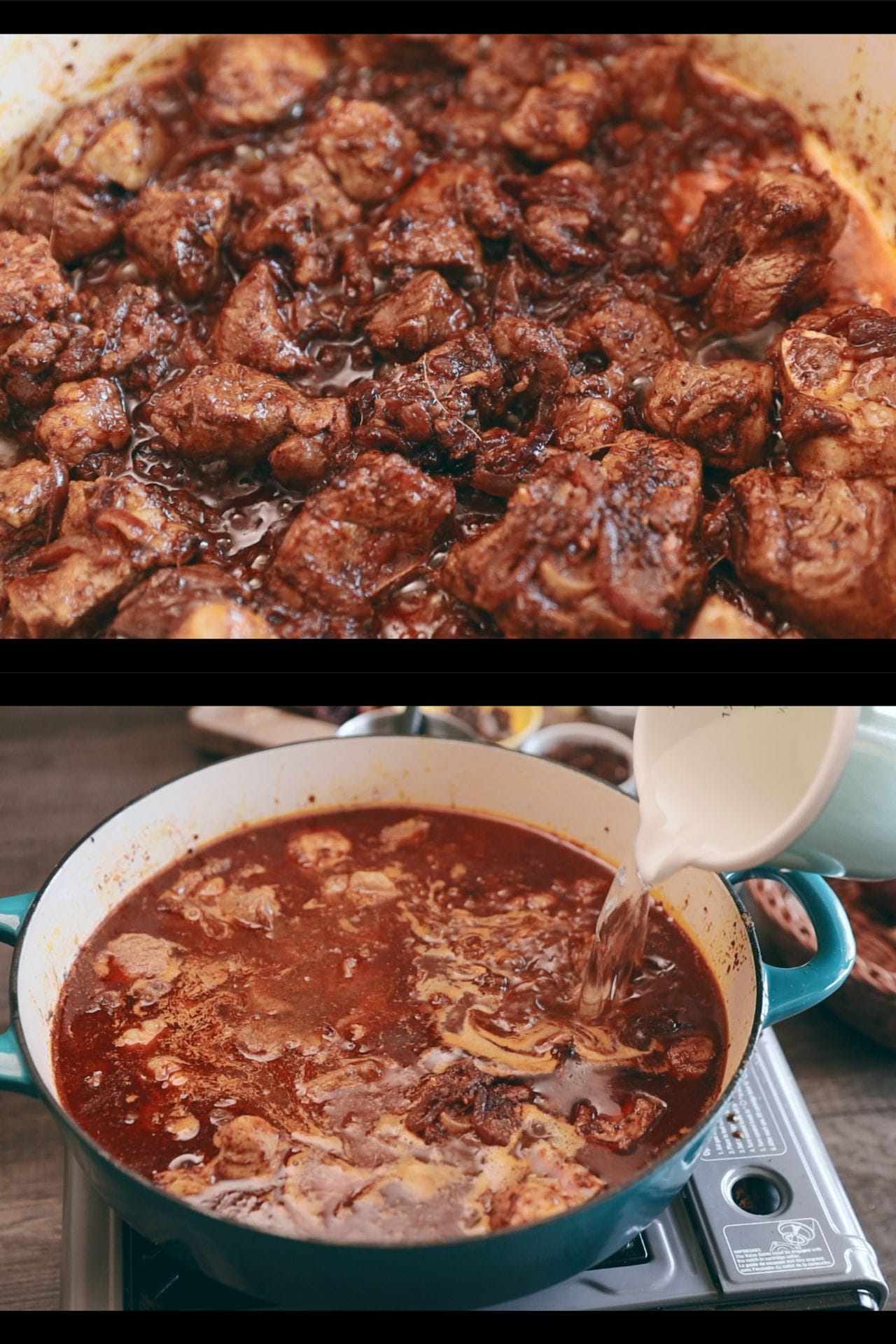
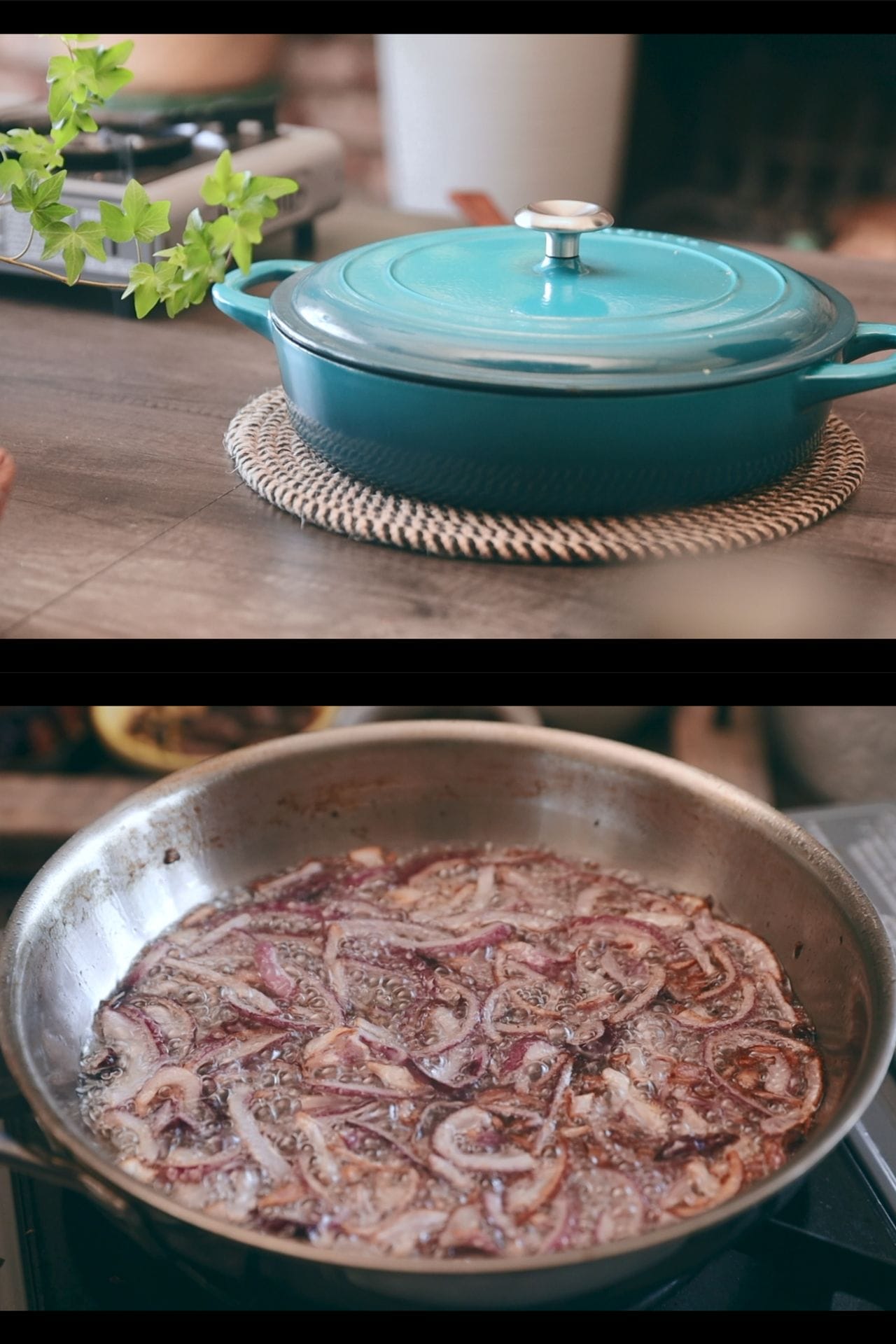
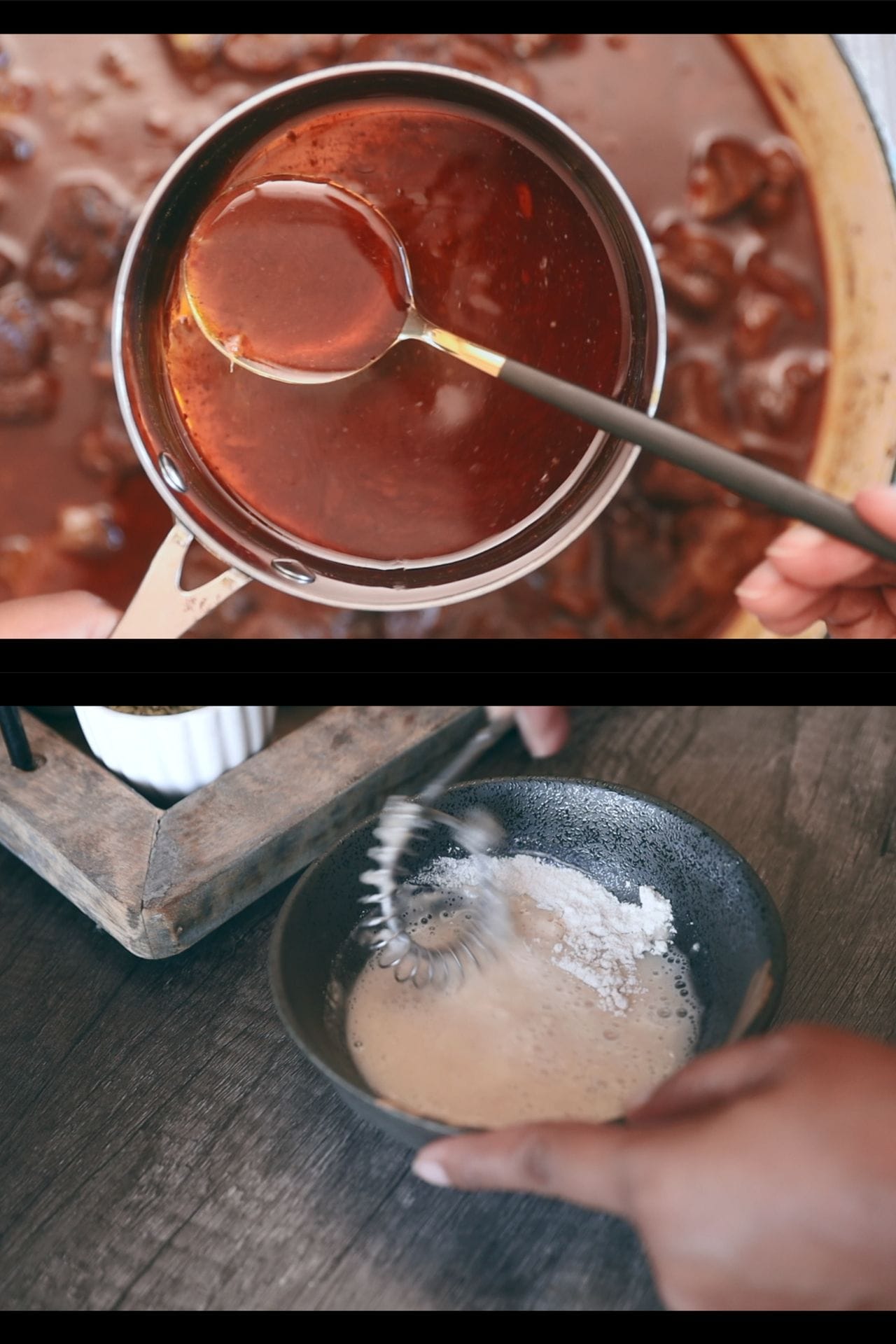
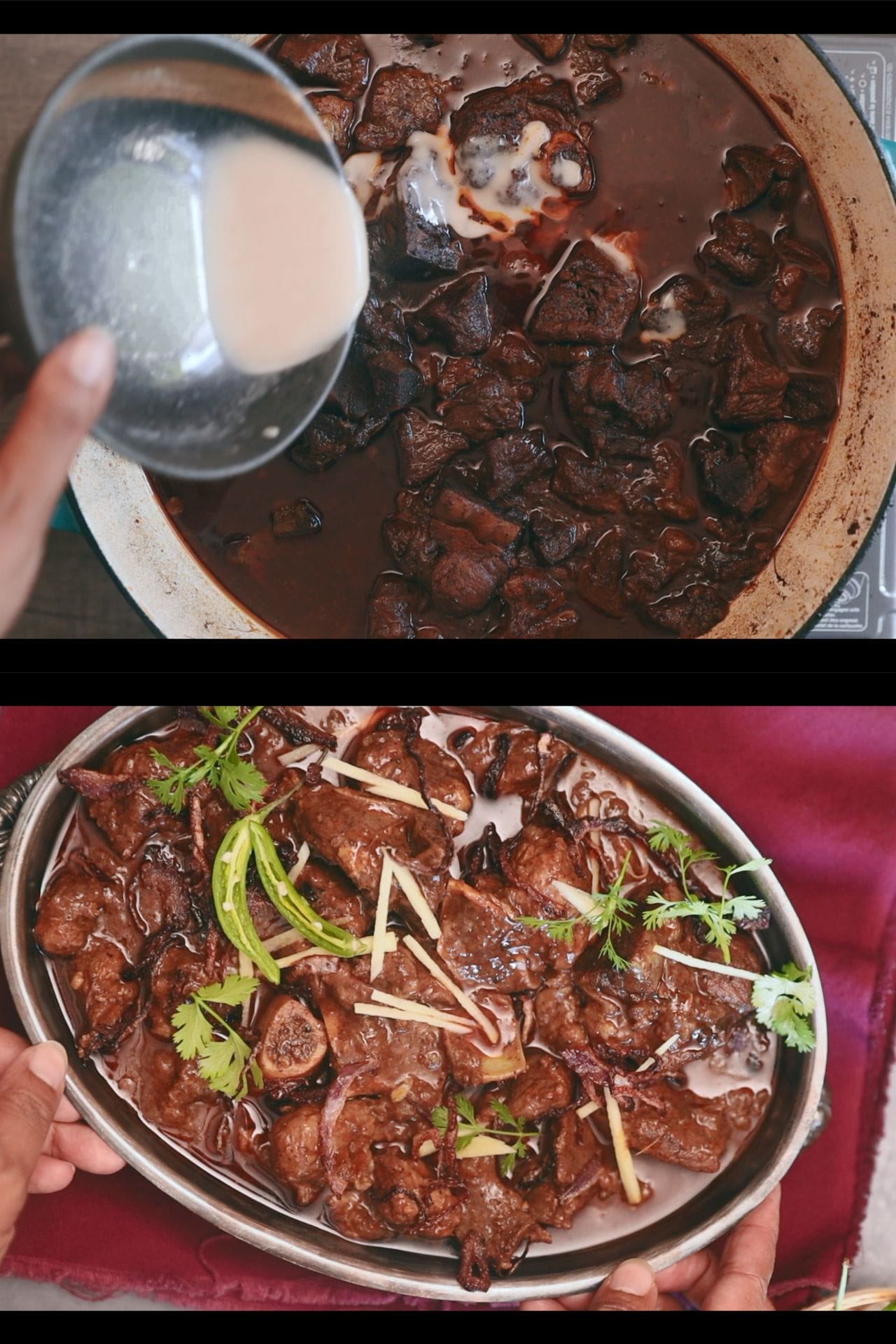
This mutton stew is a labor of love. So, try not to rush, and you have to slow cook it in old fashion way. Use a heavy bottom pan! 1- Start by making the fresh spice mix by dry roasting the whole spices for a few minutes. And then let it cool down, before you ground it to powder. 2- In a heavy bottom pan, heat mustard oil and then scatter the sliced onion along with ginger, garlic and chili paste. Season with salt and cook the onion, until it softens. 3- Add the mutton pieces and stir it around. Season with salt and cook for a few minutes to sear the meat. 4- Add the Nihari spice powder and continue cooking until you see the oil separating, which mean the spices are cooked. 5- After cooking the meat with the spices for about 10 minutes, you will realize that there is no raw flavor of the spices. 6- Add water and bring it to boil. Then lower the heat to medium low, cover the pan and cook for 1 and ½ hour. Do check in between and stir occasionally. 7 - Once the meat is cooked through, switch off the gas, cover the pan and leave it aside for 15 to 20 minutes. Don’t move the pan during this time. This step is crucial as you want the oil to float on top. 8 - In the meantime, fry the sliced onion that you will add while serving the dish. 9- Once the mutton has cooled down, and you see the oil float on top, carefully scoop out some of the oil to add as a garnish while serving the dish. 10- Make a roux by mixing flour and water. 11- Pour the roux on the curry, place it back on heat and simmer for a while. The gravy will thicken. Check for salt and add more if needed. 12- Serve the meat, by garnishing with sliced ginger, green chili, cilantro leaves, the oil that was scooped earlier, and fried onion. Mutton Nihari pairs great with Naan or jeera rice or even plain rice!
Few Key Points!
Once the mutton is cooked, you have to let it rest and cool down completely. This step will create a thick layer of oil on top. You have to carefully scoop and leave aside to be used later.The spice mix that goes in the dish is the key to making the dish so earthy and aromatic. There are a few variations of the spice mix. I just picked every kind of whole aromatic spices that I love using in any rich meat curry.The fried onion and julienne ginger at the end can be skipped, but I would recommend you to definitely use it. The fried onion adds a mild sweetness that balances out with the spices that go in. The ginger bites just add to the warmth at the back of your tongue.In several recipes that I read, Ghee is used to prepare the Nihari. I used mustard oil because that’s what I saw Chef Ranveer using. Also, when I cook mutton in Bengali style, I always go with the mustard oil. So, it just felt right. But, you could surely use ghee instead of mustard oil.
There are a lot of history and traditions around this dish. Also, cooking a good mutton curry does take some extra time and effort. But at the end, when the aroma starts to warm your kitchen, you will realize it was all worth it!