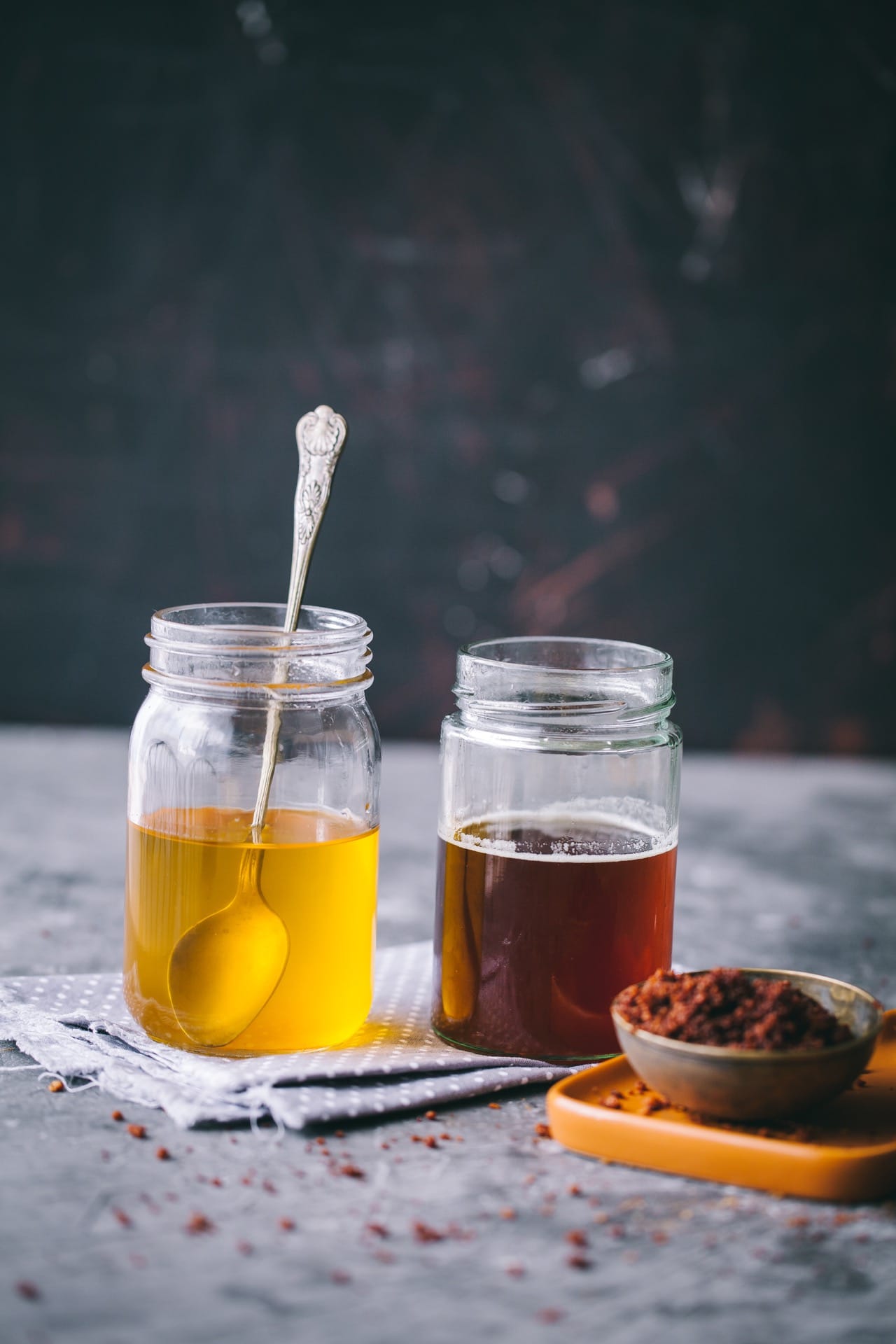
I grew up enjoying fresh ghee that Ma would make from scratch by collecting the malai (thick milk skin) that would float on top from boiling raw milk. Here in US, I can’t collect malai, so I use heavy cream instead to make fresh butter and ghee.
MAKING INSTANT BUTTER and INSTANT GHEE
Making Fresh butter and ghee can at times be little time taking. You can also follow and instant method: Instant butter can be prepared by whisking heavy cream without letting it ferment. Whisk until it curdles and starts releasing butter milk. Gather the butter and wash it several times in ice cold water and you instant butter is ready. Ghee is clarified butter which comes from cooking butter until the solid particles separates and turns golden brown. You can make ghee simmering store bought butter, strain and your instant ghee is ready. Apart of the flavorful nutty aroma, ghee is one of those good fats that your body needs. This liquid gold is heavily used in Ayurveda for several medicinal applications and it is recommended for expecting mothers. It is also considered to be sacred and used in several religious rituals. Very rarely, you will come across an Indian pantry where ghee is not used.
Make fresh butter and ghee by fermenting the heavy cream!
In India, fresh ghee is prepared by gathering malai (thick milk skin) that forms from boiling milk and then cooling it down. The malai is gathered over a period of days thereby gets fermented in the process. Fermenting the heavy cream with little bit of yogurt is not mandate but it will add a lovely mild tangy taste to both the butter and ghee. Don’t ferment for more than 3 days or else it can taste too sour. Also in peak summer month, your heavy cream might ferment in just one day!
Steps to Make Fresh Butter and Ghee:
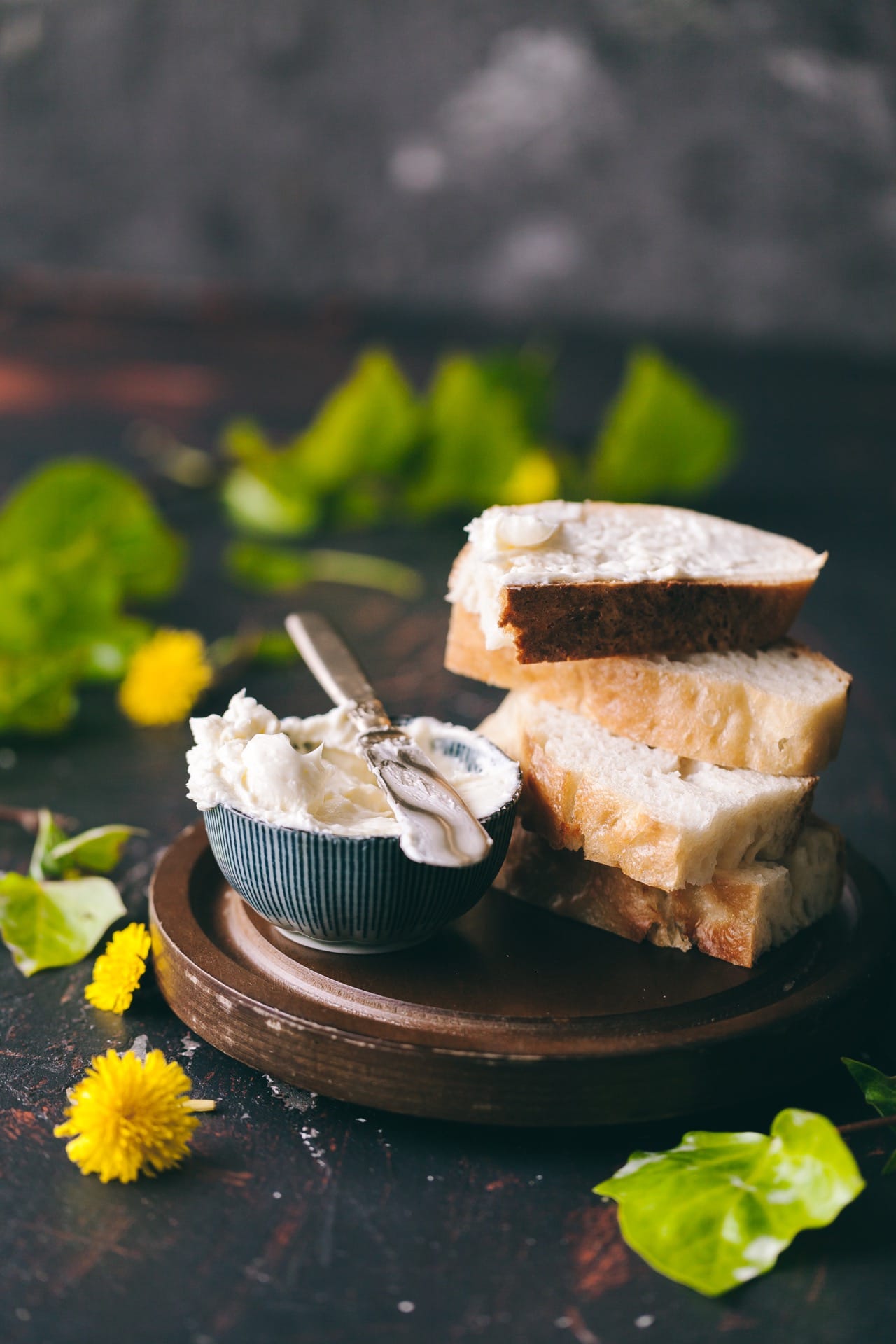
Mix little yogurt with heavy cream and leaves it untouched at room temperature for 3 days. This will ferment the cream. Do not let it ferment for more than 3 days.Using a whisk attachment, whisk it. At firsts it will turn into whipped cream, then it will curdle and get very watery as it starts to release the butter milk. And in 10 minutes of whisking at high speed, you fresh butter is almost ready.The next step is crucial where you wash the butter in cold ice water multiple times until you see clear water. This is ensure all the buttermilk is out of the butter and you are left with just pure butter.Wrap the fresh butter in a muslin cloth or clean cotton cloth and squeeze out gently all the excess water.You fresh butter is ready. You can add salt at this point.
Steps to Make Ghee:
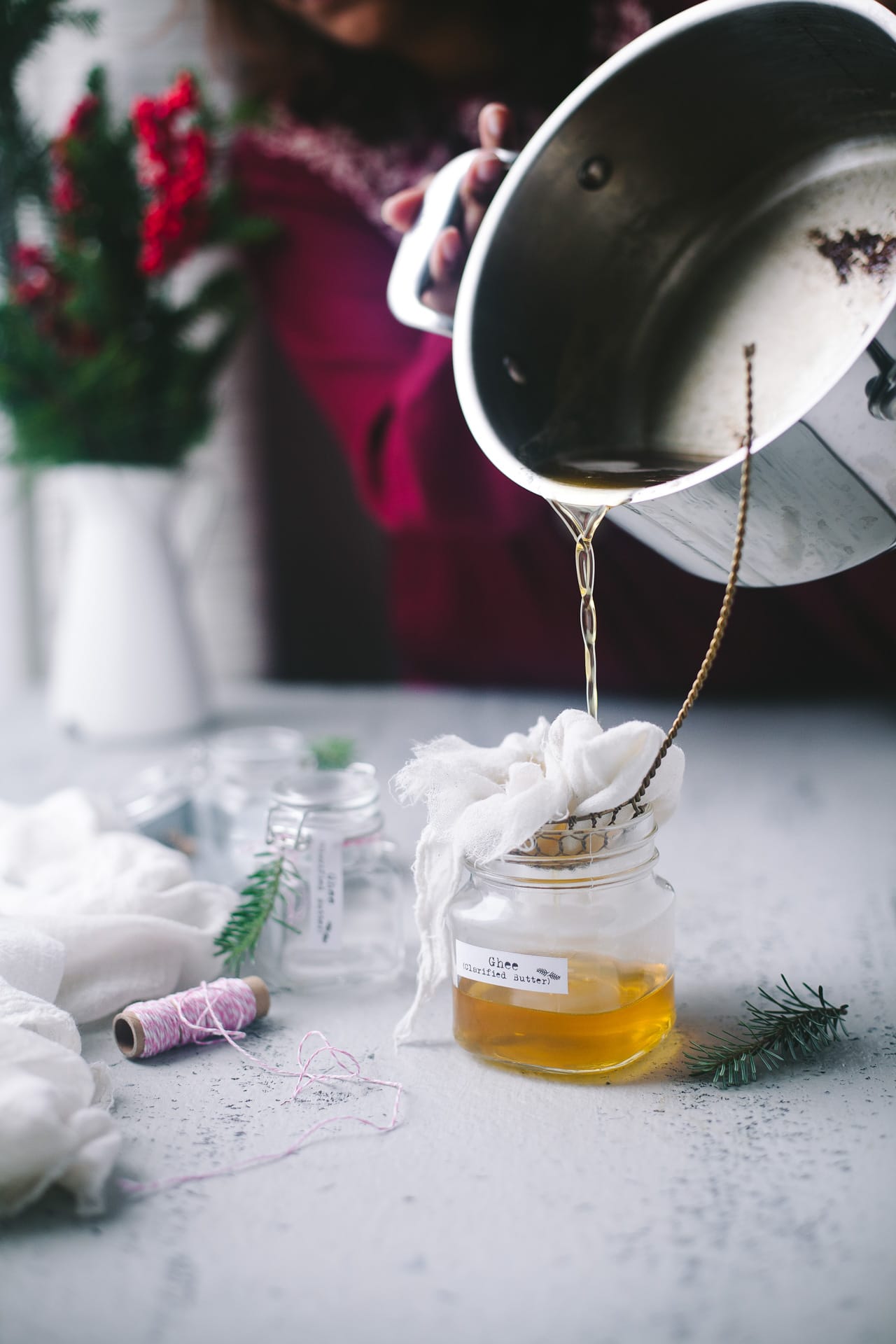
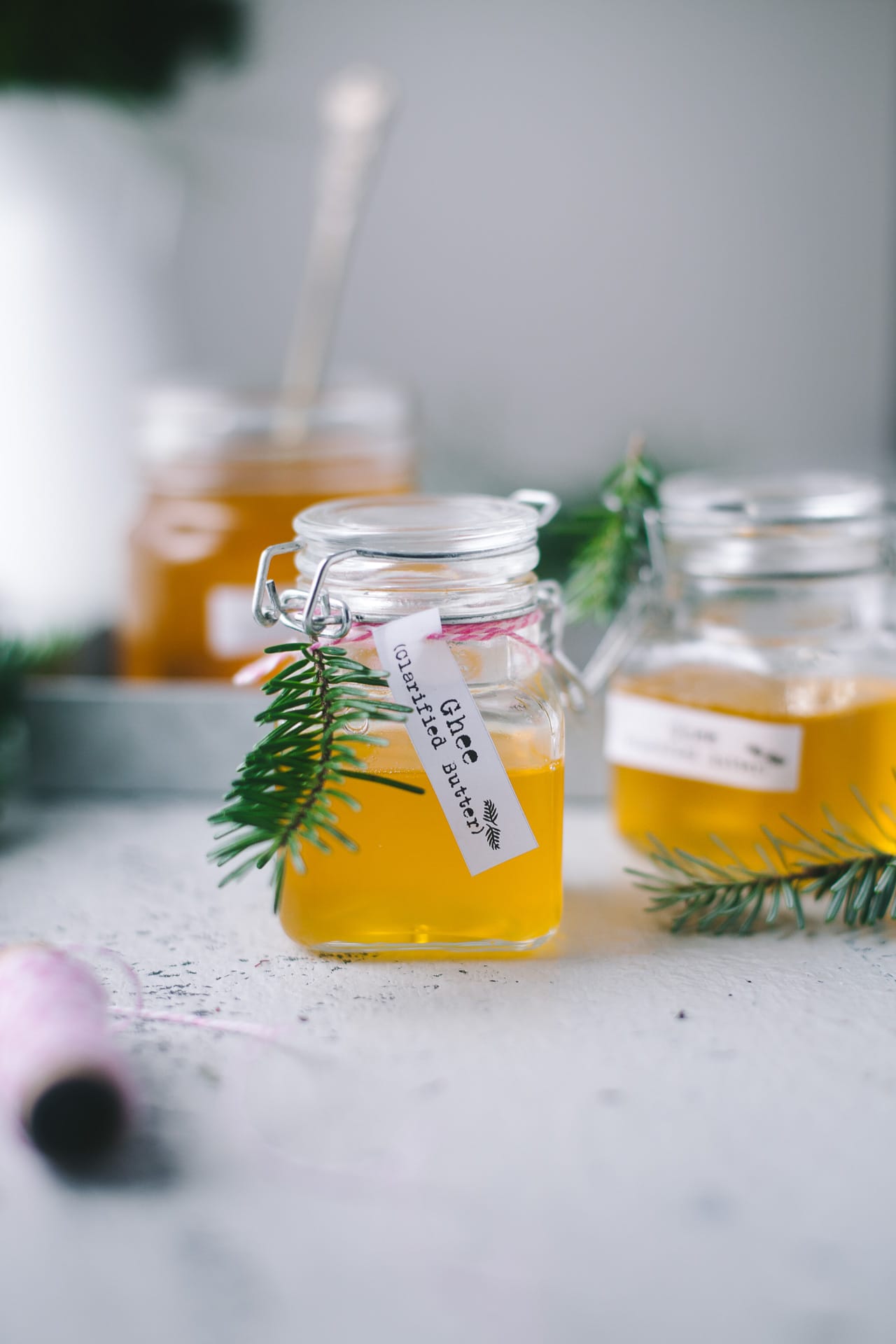
Simmer the fresh butter in a heavy bottom saucepan in medium heat until the solid particles separate and turns light brown. I used this beautiful concentric covered casserole from Tuxton Home. I have been using their utensils for quite sometime now and absolutely love it. Especially, this casserole is the one that I use quite often to make rice, pudding and ghee! Strain the ghee in a clean glass jar. Ghee doesn’t need to be stored in the refrigerator. BENGALI GHEE - While the most common ghee in golden yellow in color, more caramelized brown ghee is popular among Bengalis. The steps are no different, you just need to caramelize it further. Keep in mind that the ghee color will fade as it sets and turns semi solid.
What about the milk solids that is at the bottom of the pan?
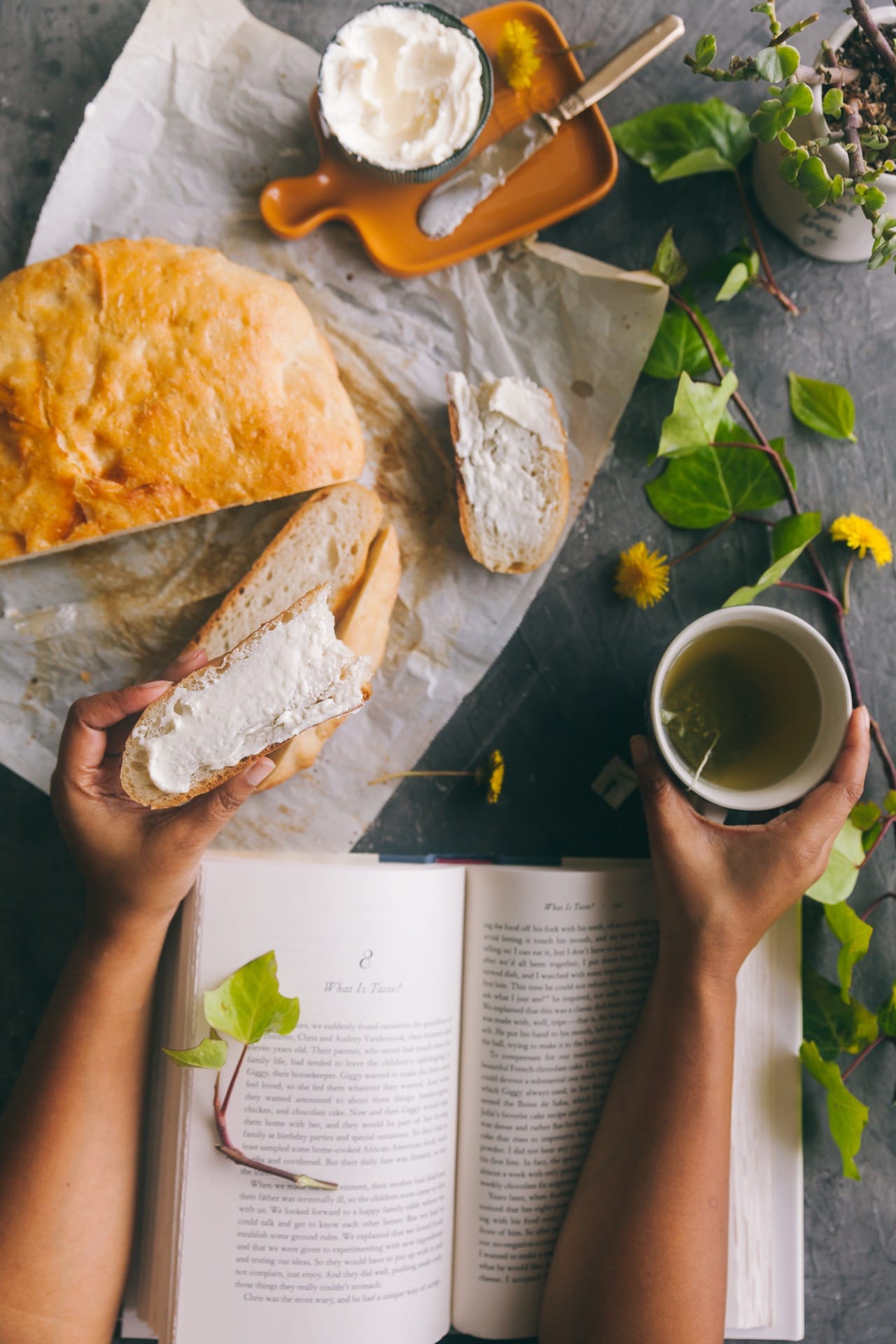
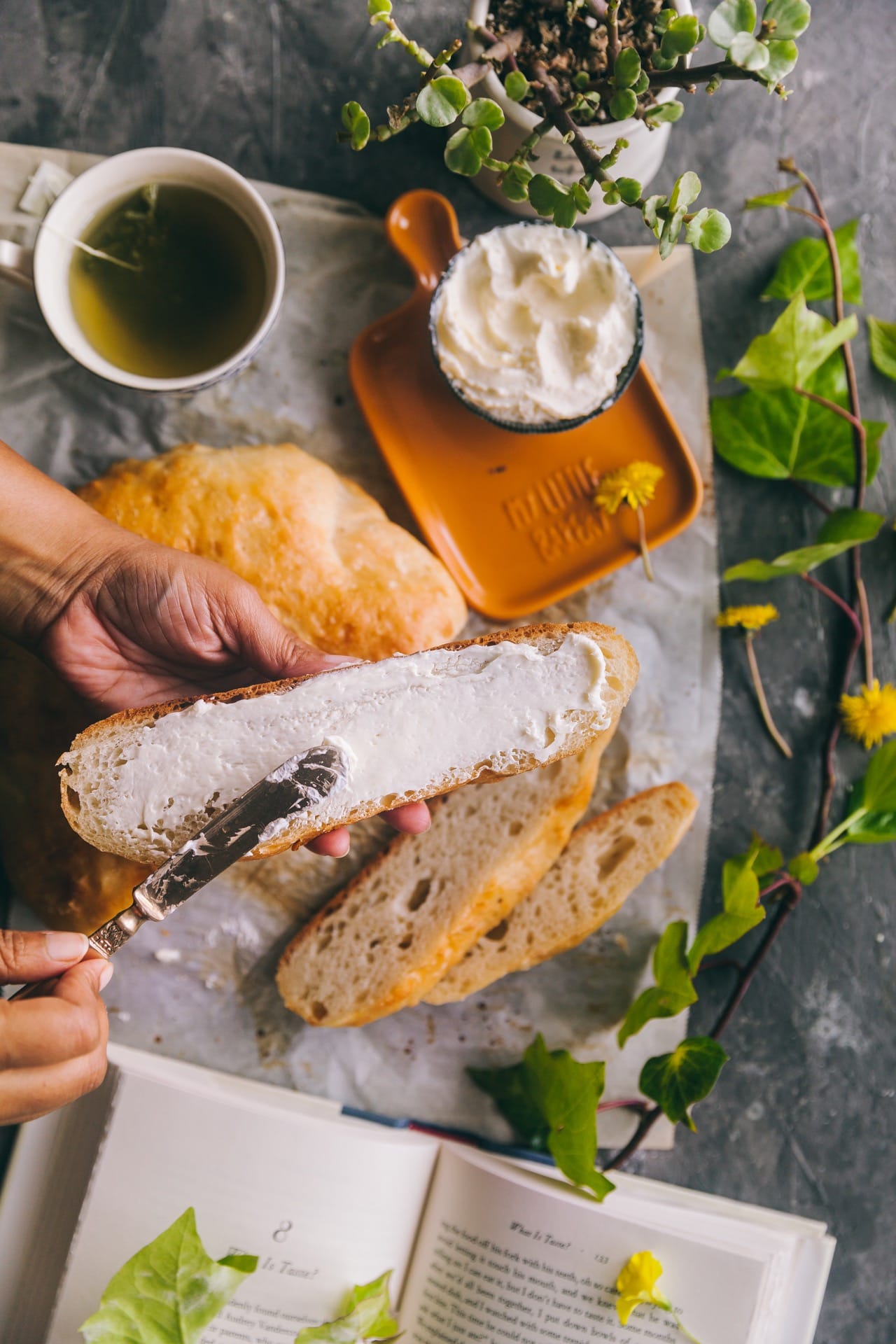
Those brown milk solids are one of my favorite things to eat. Of course, the milk solid contains a lot of fats, which is why it’s often discarded but if you want to use it, there are various different ways that you can. I love it just as is with steamed white rice and a pinch of salt. Arvind tells me he loves it with sugar sprinkled on it. Here are some interesting ways to use it. Do keep in mind that it can taste good only if it’s still toasty brown and not burnt. The taste of fresh butter and ghee is unbeatable and truly amazing. I hope you will give it a try. Enjoy fresh butter with this simple no knead bread!