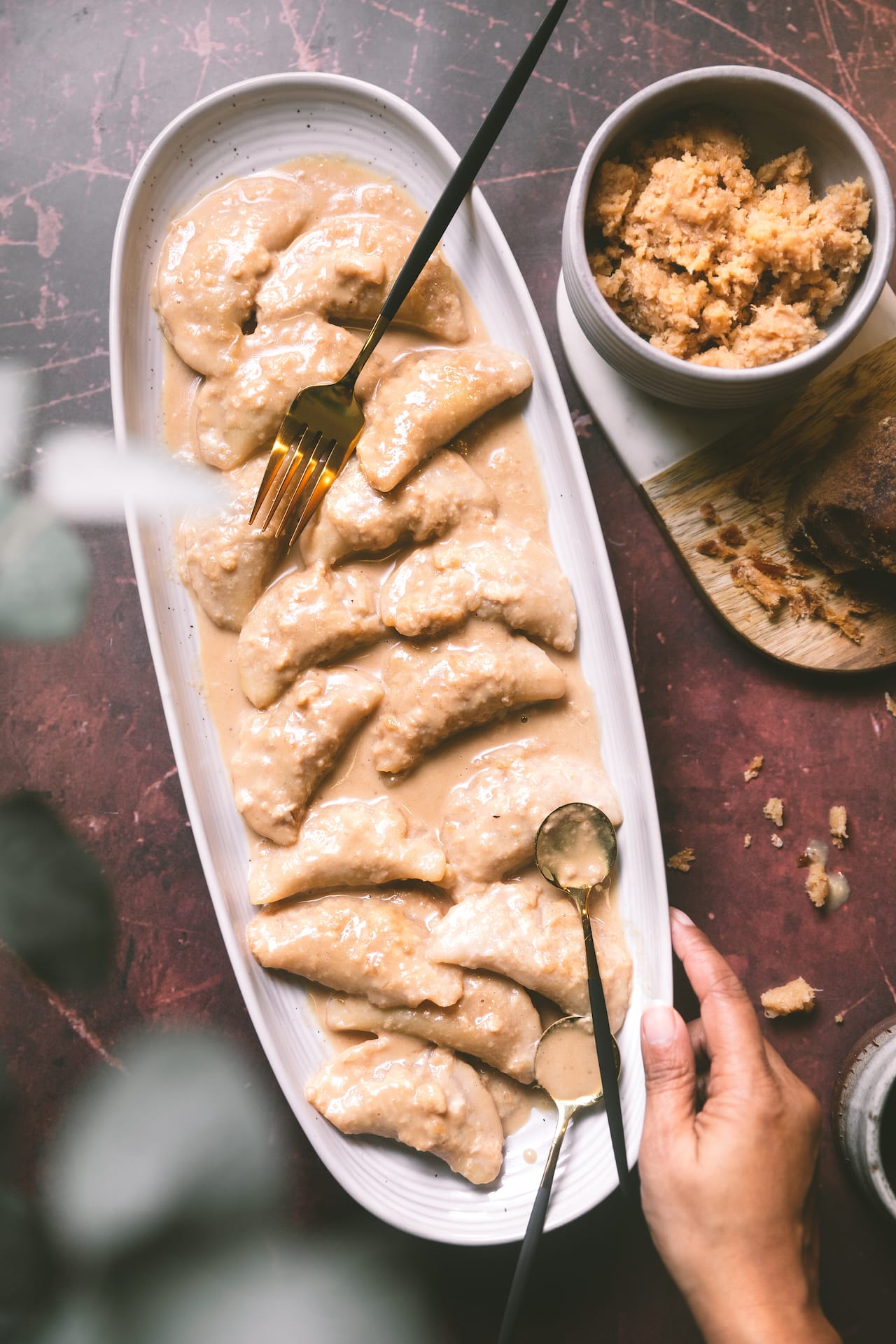
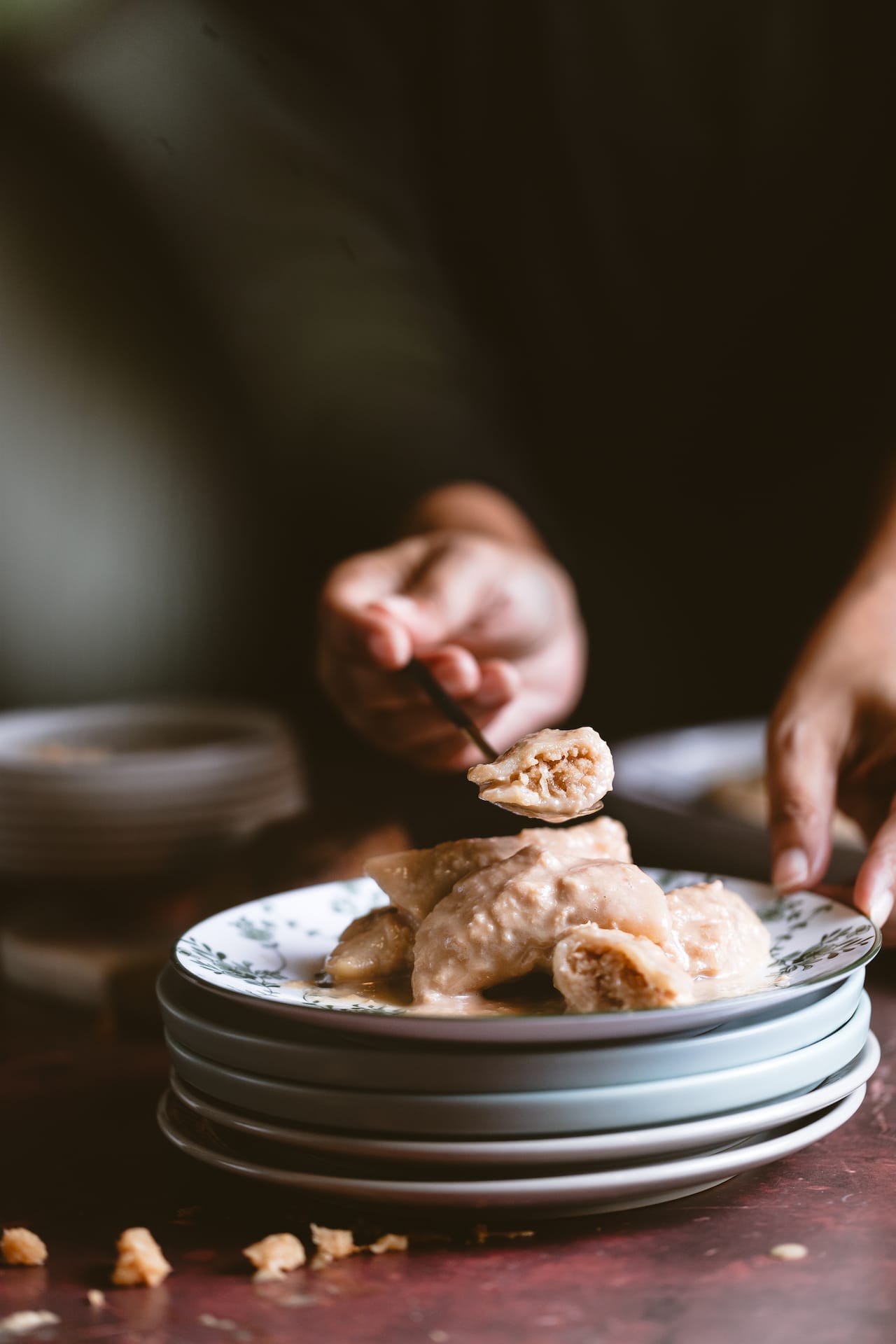
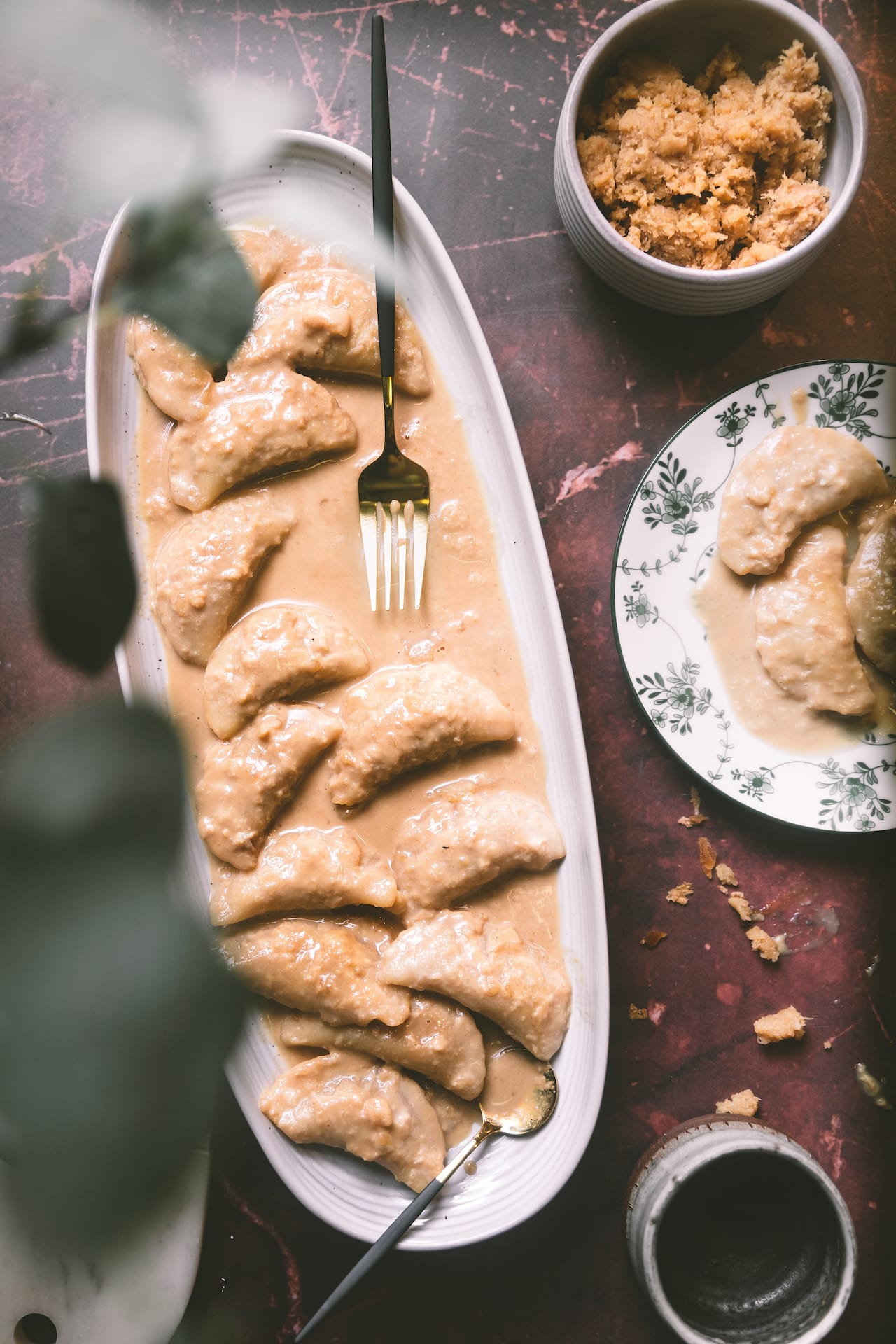
What is Dudh Puli?
To break it down, dudh or doodh is milk and Puli is dumpling. Dudh Puli falls in the category of “pithe” which is a type of dessert that we prepare using rice flour, jaggery, coconut. It is very popular in the region of West Bengali, Orissa, Assam, the general Northeast Region of India.
There are a wide range of pithe you can prepare, and my all-time favorites are Patishapta and Chitoi Pitha Most of the pithe calls for rice flour, which makes it gluten free.
Ingredients for Dudh Puli
Rice Flour - You want to use good quality rice flour. You don’t want something that is too fine like all-purpose flour or too grainy, either. Coconut - We make the filling using freshly grated coconut. You can use frozen too, but avoid using dry desiccated coconut. Date Palm Jaggery - Since Date Palm Jaggery is a winter specialty, we use it a lot a. a sweetener in our desserts. Outside India, you can find this particular variety of jaggery in Indian or Bangladeshi store. Ask for “Patali Gur/ Nolen Gur/ Khejur Gur” Khoya - Khoya or Mawa is solid milk, and it is not always added in the filling. I like the taste of Mawa with coconut, and so I add it all the time in the filling. Milk - It is a milk based dessert and I like to use only whole milk. You can definitely switch it up and try different variety of milk. You can find the exact measurement in the recipe card below.
Steps to prepare Dudh Puli
Preparing the filling
Step 1 - In a skillet and the freshly grated coconut along with grated patali gur. The filling will not taste good if you use dry coconut flakes. Patali gur is date palm jaggery and traditionally used in this filling, but you can use other variety jaggery too. STEP 2- Using your clean hand, mix the jaggery with coconut. This step will make sure that the jaggery and coconut is mixed nicely before you start cooking them together. STEP 3- Add the chopped or grated khoya (solid milk) if using and then cook the mixture in low heat for 5 minutes. As you cook and stir, the khoya and jaggery will melt, and all the ingredients will come together evenly.
Preparing the rice flour dough
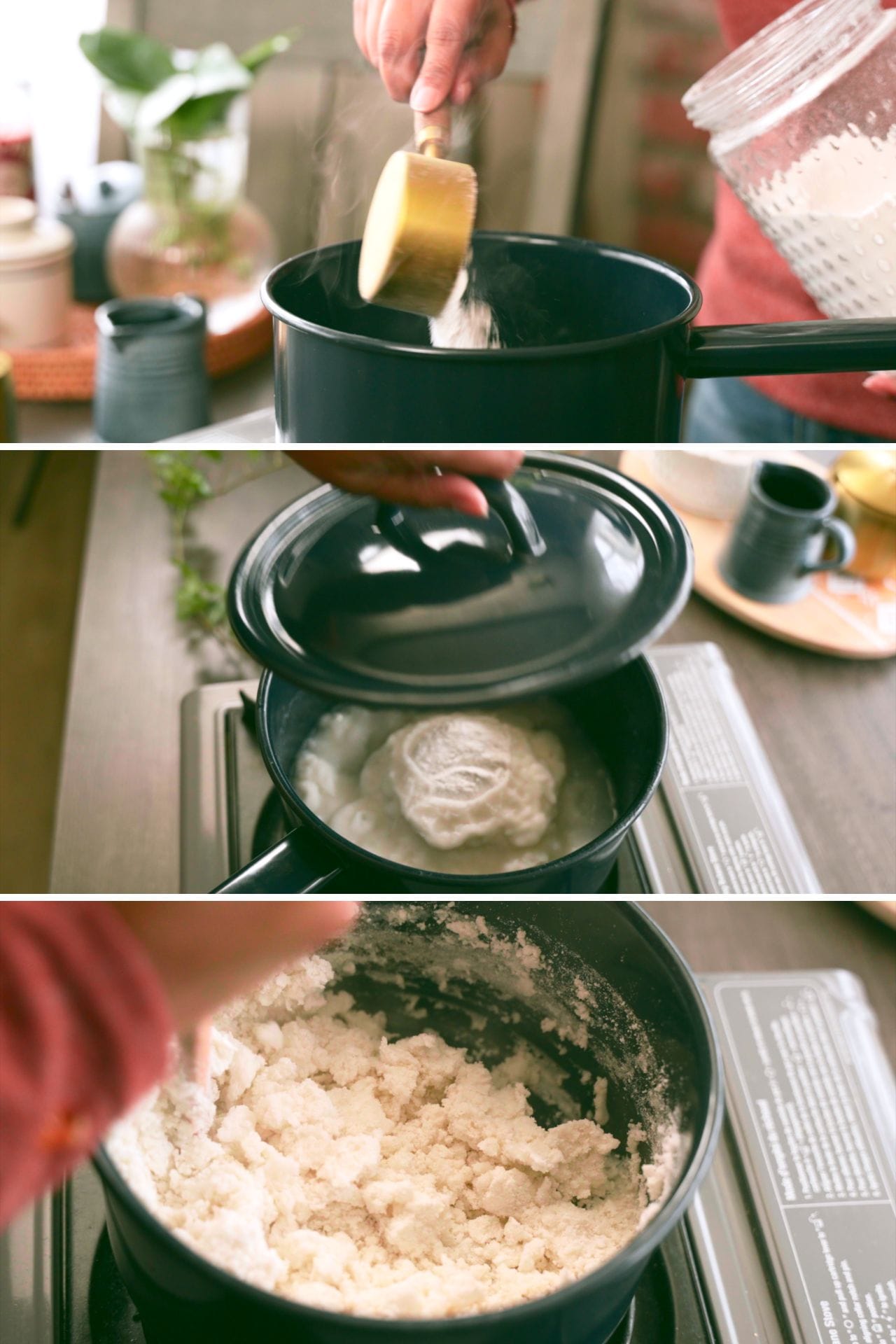
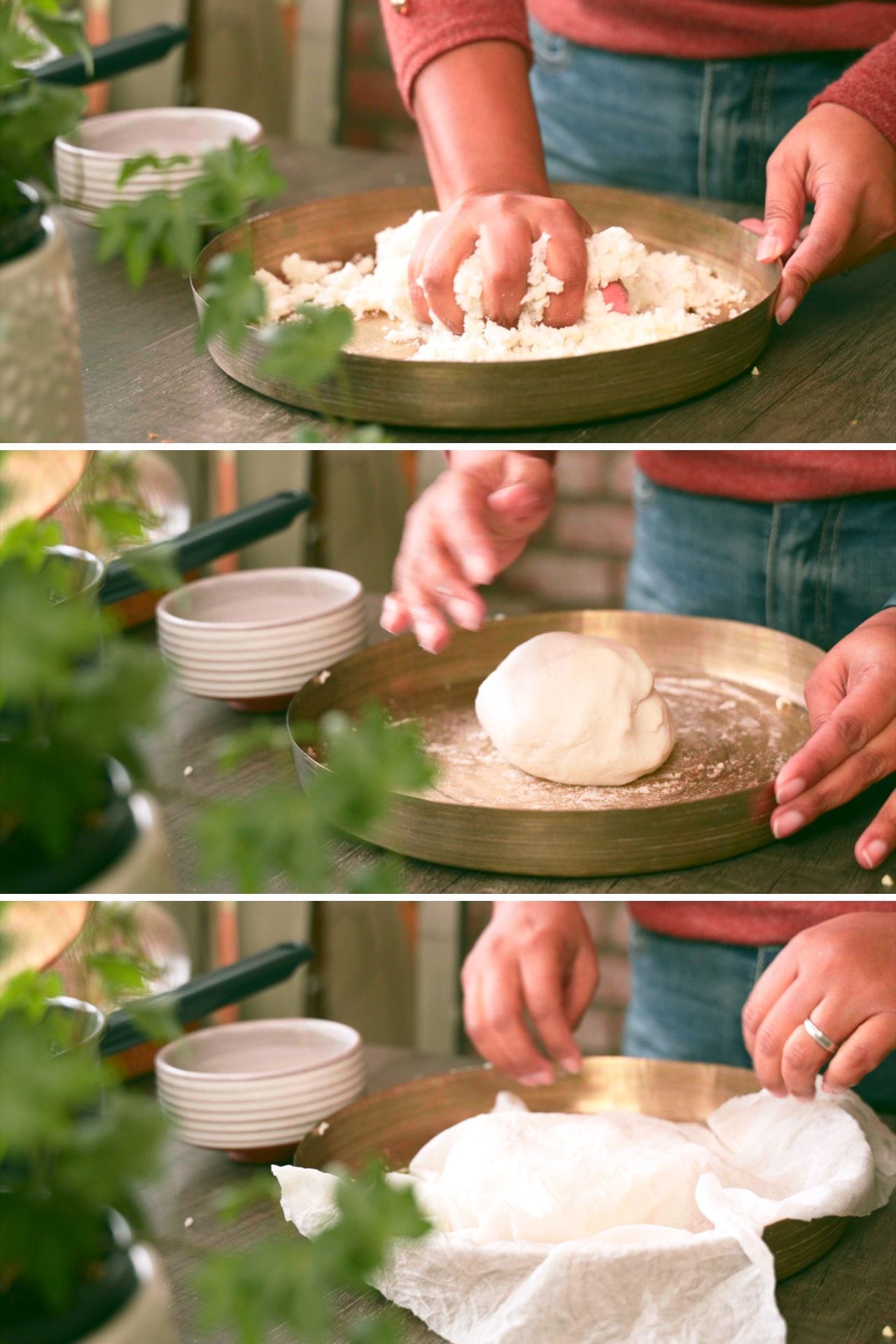
STEP 4- In a heavy bottom pan, add water and a pinch of salt. Bring it to boil and then add the rice flour. STEP 5 - Switch off the heat and cover the pan for 3 minutes. Don’t stir at this step. STEP 6 - After 3 minutes, open the lid, and stir the mixture with the back of the spoon. It will form a crumbly texture. STEP 7 - Transfer the crumbly texture to a plate and keep a bowl of warm water ready. Sprinkle a little amount of the warm water and start kneading the mixture. You have to knead while it is still warm. STEP 8- You have to knead for roughly 10 minutes to from a smooth dough. Keep in mind, you might need to add more water or a little bit of extra rice flour to form the smooth dough. STEP 9- Cover the dough with a damp cloth for 15 minutes.
Shaping the Puli
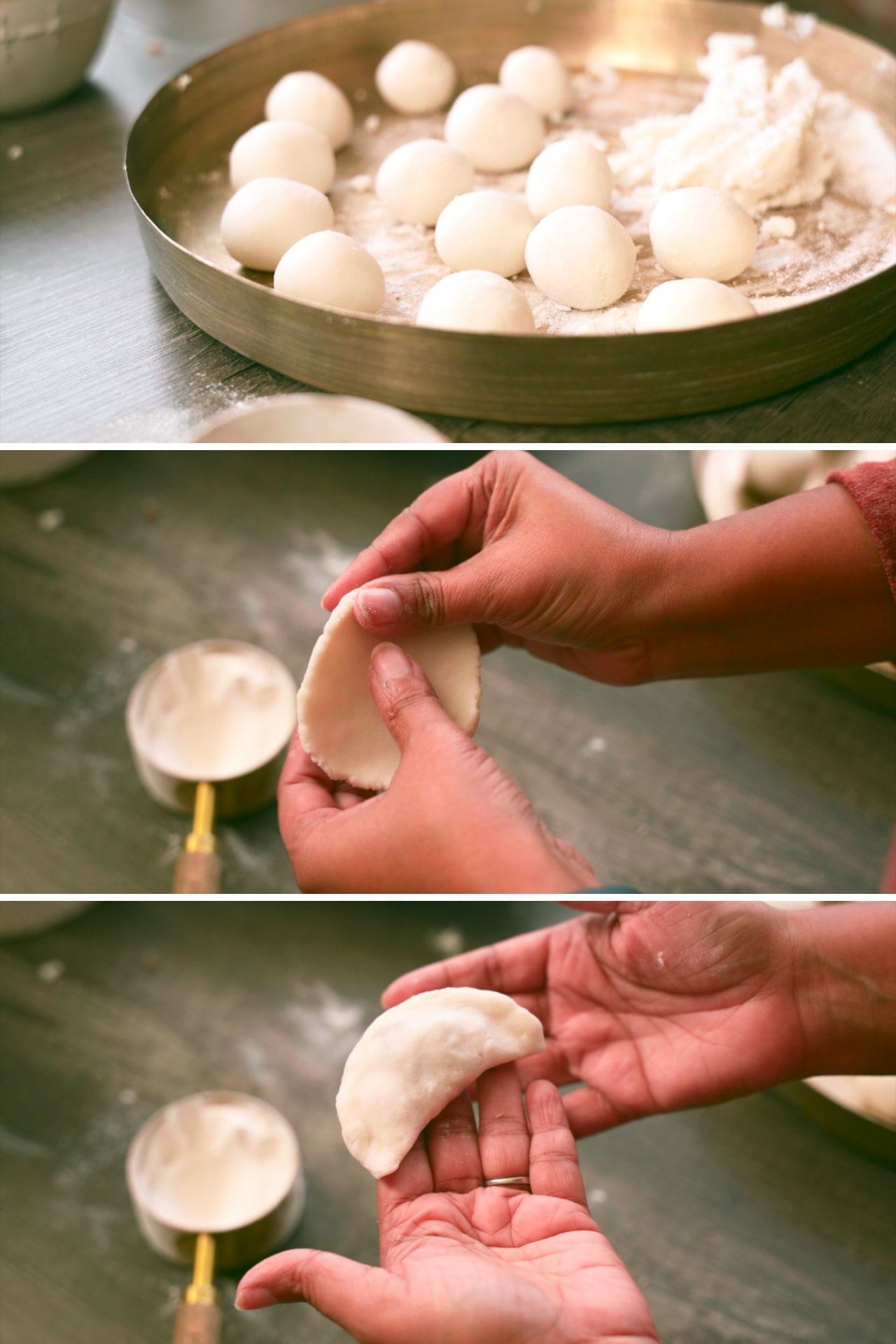
STEP 10- Divide the dough into 16 to 17 small portions and shape them into tiny balls. If your hand gets sticky, just wet your hand. Avoid adding extra flour. Cover the dough balls as you shape one portion at a time. STEP 11- Rub the small ball with a little rice flour and start flattening it buy pressing and rotating as you go. STEP 12- Add 1 tablespoon portion of the filling and then seal the edges gently. Be gently as you do this step, as rice flour can easily break apart. Make sure to cover the shaped puli and as you shape the rest of them.
Cooking the Dudh Puli Pitha
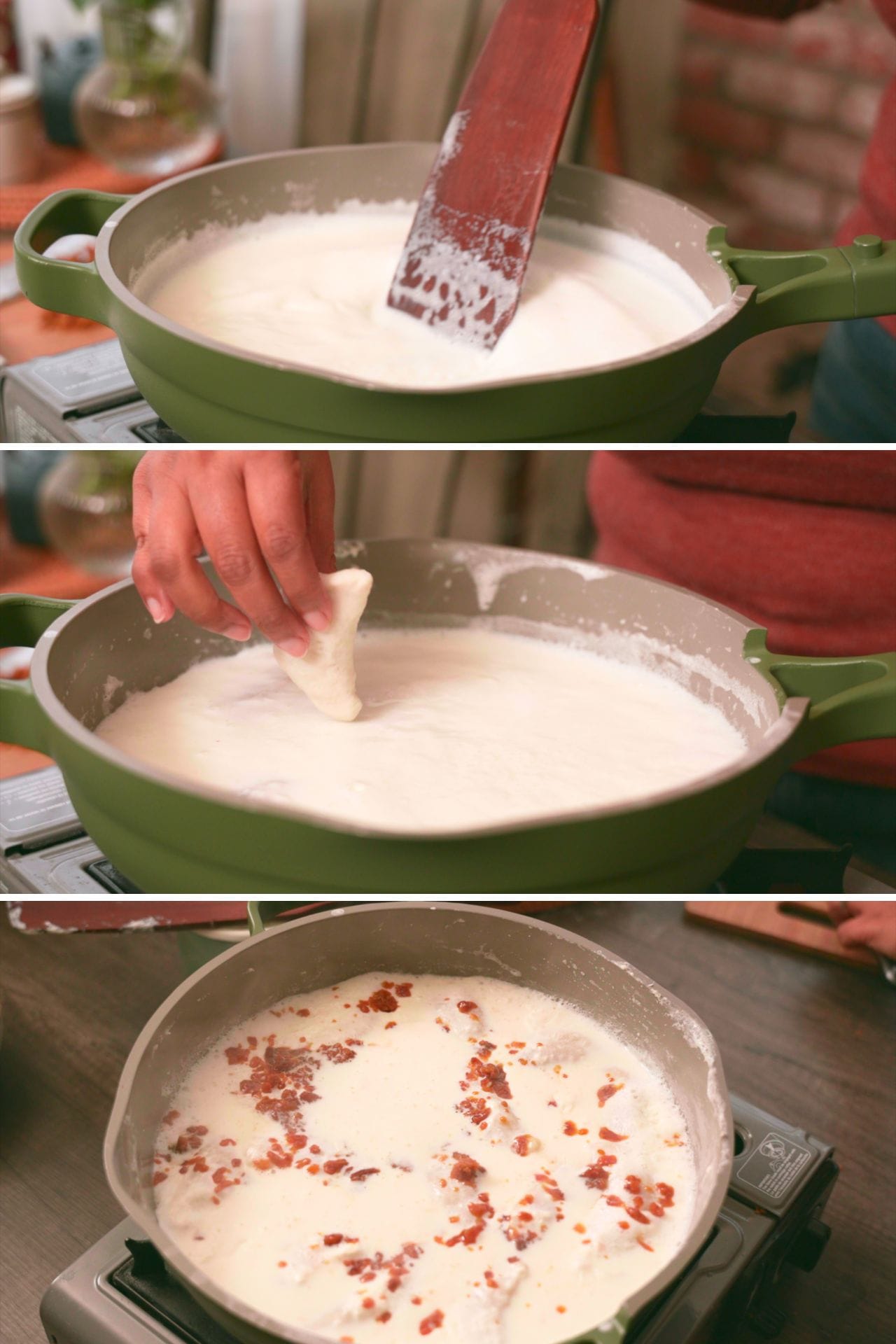
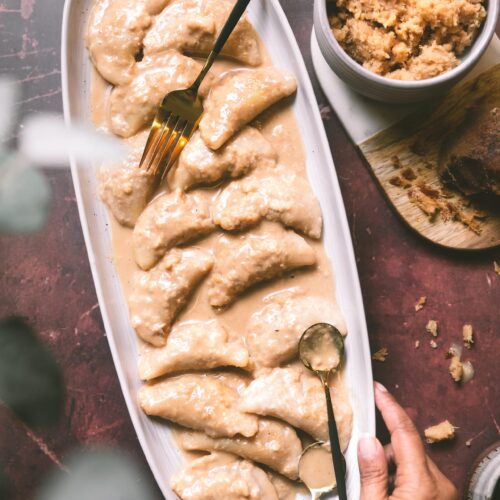
STEP 13- Simmer the milk in a heavy bottom pan for 15 minutes to thicken the texture of the milk. Keep stirring in between to avoid the milk for getting burnt at the bottom of the pan. STEP 14 - Gently slide the shaped puli in the milk and cook for 10 minutes in medium heat. Gently stir in between. STEP 15- Switch off the heat and sprinkle the grated jaggery. Cover the pan and leave aside for 5 minutes. This will melt the jaggery. Mix it around and serve warm! The filling that I used here is the same that I used in Patishapta. You will need half a cup of the filling for this recipe. Dudh Puli tastes best when served fresh. It tastes very satisfying and comforting while it’s warm.
Storing and Reheating Dudh Puli
Often we prepare Pithe in small batches and serve it fresh. If you, however, make in big bulk, then store in the refrigerator. Keep in mind that since it is prepared with rice flour, the dough will feel hard as it sits in the fridge. I prefer to bring it to room temperature before reheating in the microwave to soften the dudh puli.
Try these Bengali winter specialty
Bengali Aloo Dum Chicken Ghugni Pomelo Salad Egg Tadka/ Egg Torka Koraishuti Kochuri Kumro Pata Torkari